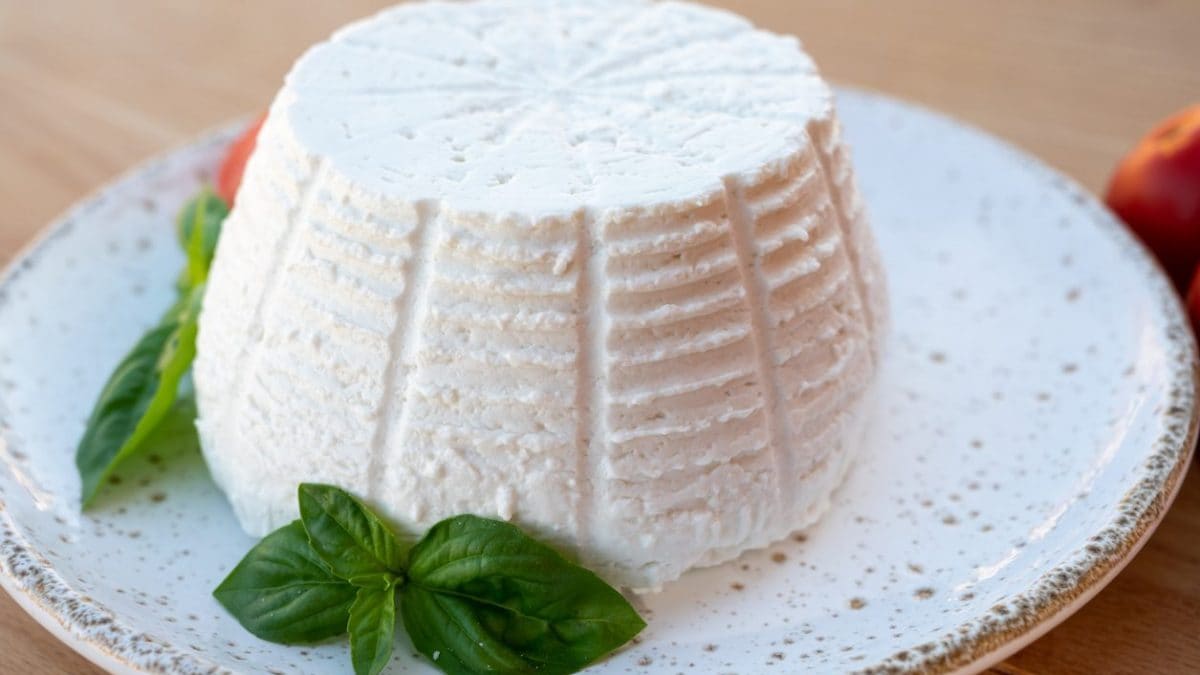
Ricotta, often considered a cheese even though it's actually a dairy product, is one of the oldest dairy products in our cuisine , praised by Homer in the Odyssey and attributed to Apollo's son Virgil. You can eat it on its own, and it's already delicious, but you can also use it in a variety of sweet and savory recipes, from rustic pies to tarts. As with all dairy products, there are different varieties of ricotta, recognizable primarily by the type of milk used to make it. The most common varieties, in our case, are cow's milk ricotta and sheep's milk ricotta (but there are other types, albeit more niche ones), both very good but with differences due to the nature of the animal that provides the milk. Let's discover together all the characteristics and ways to use each type.
Cow's Milk Ricotta and Sheep's Milk Ricotta: The Differences
Cow's milk ricotta and sheep's milk ricotta are quite similar in terms of preparation: all ricottas, regardless of the type of milk used, follow the same production process. Ricotta is made using the whey left over from cheese production (sheep's milk or cow's milk in our case), which is "recooked" for a second time at around 195°F/90°C. During cooking, the proteins and fats in the liquid rise to the surface as white flakes, which are collected and placed in fuscelle, the traditional containers that give ricotta its characteristic shape.
The characteristic that most distinguishes the two varieties of ricotta is the flavor: cow's milk ricotta is delicate, soft, and sweet, while sheep's milk ricotta, like all dairy products made from sheep's milk, has a more intense flavor, with strong vegetal and hay notes. This difference depends on the type of diet the two animals are fed, but also on the fact that sheep's milk has a higher fat content than cow's milk.

Precisely for this reason, the two varieties of ricotta also differ in terms of their nutritional profile. Although both are considered low-fat products, ricotta made from cow's milk is lower in fat than sheep's milk, with a fat percentage that in the former case is around 10% and in the latter varies between 15 and 20%. The same is true for calories (146 kcal per 100 grams of cow's milk ricotta, 157 kcal for the same amount of sheep's milk ricotta), while in terms of vitamins and minerals, the two products are more or less equivalent.
Culinary Uses of The Two Ricotta Varieties
Your preference between cow's milk ricotta and sheep's milk ricotta therefore depends primarily on personal taste and how you intend to use this ingredient. If you want to make a classic pasta and ricotta dish, you can use both and choose the one you prefer, while other recipes are more specific in calling for one of the two varieties.
Preparations such as Neapolitan pastiera or Sicilian cannoli and cassata, to name two particularly famous examples, call for sheep's milk ricotta, which is fattier, tastier, and more intense. It's therefore safe to say that for recipes requiring a particularly strong flavor, it's best to choose this variety. Other recipes that call for sheep's milk ricotta include, for example, Sardinian pardulas and Sicilian pasta alla Norma.

If you want to prepare a lighter recipe in terms of flavor and energy, choose cow's milk ricotta, ideal with its lightness for preparations such as ricotta cake, ricotta mousse with fruit or fillings for savory pies such as the classic ricotta and spinach one. Cow's milk ricotta is also used to lighten certain preparations as a substitute for cream or butter, because it has a neutral flavor that does not interfere with the other ingredients in the recipe.
;Resize,width=767;)
