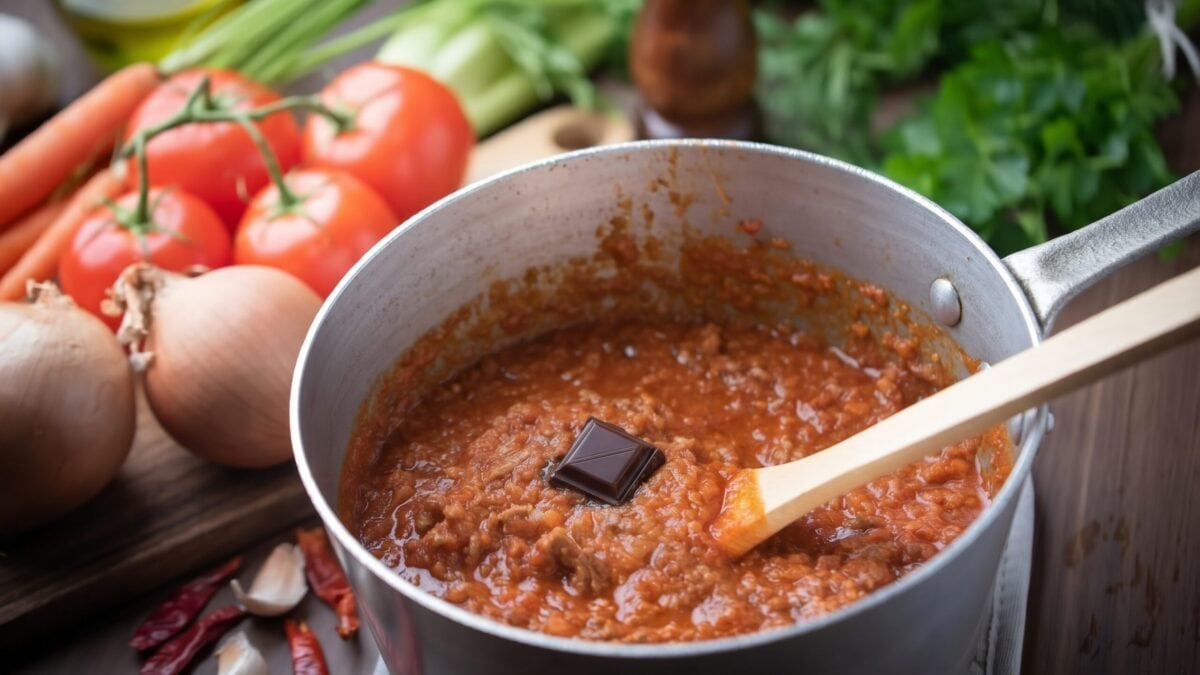
Social media provocation or grandma‘s secret? You've probably seen videos recently of boys and girls putting a square of chocolate in the ragù their Italian partner is cooking, causing an adverse reaction similar to that of pineapple pizza. In reality, the combination of chocolate and savory dishes, especially those featuring meat (or with sweet and sour elements, like Sicilian caponata), has existed for centuries, if not millennia: the Mayans and Aztecs were the first to use cocoa as an ingredient, so much so that a full-bodied and spicy chocolate sauce called mole poblano is found in traditional Mexican dishes, accompanying rice and chicken. The fascinating detail is that this iconic preparation was born in Mexico during the colonial period from the union between the ancient indigenous tradition of cocoa-based sauces and the products brought from Europe: the European colonizers themselves, who had imported chocolate to the Old Continent at the time of the conquistadors and who, later, had made it the protagonist not only poured into an elegant cup, but also among the must-haves of that aristocratic and sumptuous cuisine – where game stood out – in which flavors were mixed, so as to make the boundary between sweet and savory dishes in Western tradition not as clear as it is today.
Why Do You Put Chocolate in Ragù?
Contrary to popular belief, chocolate isn't meant to sweeten ragù or meat stews. Its historical use is to balance the intense flavor of game meats with its bitter note, creating a deeper, more aromatic flavor and also lending density to the sauce's structure. It's not usually used alone, but in tandem with other ingredients that serve the same purpose, such as spices. Chocolate in sauces doesn't reduce the actual acidity of tomatoes, but rounds out the perception on the palate thanks to the fat content of cocoa butter and the harmony of its bitter notes.
Here's Where You'll Find Chocolate and Meat Together
It is the recipes of late Renaissance and Baroque banquets that help us understand which are the best combinations with chocolate or cocoa: the chocolate bar as we know it today, in fact, had not yet appeared (it will do so in the 19th century) between the 17th and 18th centuries and this exclusive food was consumed mainly as a drink, enriched with spices such as aniseed, cinnamon, pepper, chili pepper.
The mix works not only in the cup, but also to give a luxurious touch to the dishes served in the courts: the most sumptuous meals featured mainly game and venison, spoils from hunting trips organized by the nobility. A recipe that comes from an ancient tradition, dating back to the Medici, is that of Tuscan wild boar in dolceforte: it is a stew where the meat is first marinated in red wine, pepper and cinnamon, then slowly cooked and, finally, embellished with chopped dark chocolate, pine nuts and candied fruit. Or in 1775, a French royal dish of the highest level appeared, which is not coincidentally called lièvre à la royale: it features a hare roll stuffed with pork, foie gras, mushrooms and truffle, whose thick red wine cooking sauce was traditionally enriched with spices and a touch of cocoa or bitter chocolate to balance the strong gamey note.
And in ragù, where did our research begin? In the Bolognese version there is no trace of this "secret" ingredient, which however is mentioned in some versions of Neapolitan ragù, which was born as a leftover recipe in which tomato puree, beef and pork (from sausage to pork rind) are present, in addition to the pine nuts and raisins found inside the chops, to be cooked together with the sauce: melting a small square of dark chocolate harmonizes the whole thing and it is not the starred chefs who say so, but popular tradition.
Which Chocolate Should You Choose?
We've mentioned it several times: dark chocolate is best suited to enhancing savory recipes. Its bitter note pairs perfectly with the strong flavors of meat and the acidity of tomatoes. We recommend using its most versatile version, 70% dark chocolate, as it's made up of 70% cocoa mass and the remaining 30% sugars and cocoa butter. The flavor is rich and bold, but not pungent, and the texture is velvety, ideal for adding body to sauces when it melts. How much should you use? A small square, equivalent to about 5-6 grams, is enough for ragùs: the flavor shouldn't be noticeable. In stews, however, especially if they're based solely on game, you can use up to 20-30 grams per 1 kg of meat, finding the right balance with spices and dried fruit. Finally, add it only when cooking is practically finished, mix and let it rest before seasoning the pasta or serving the main dish.

