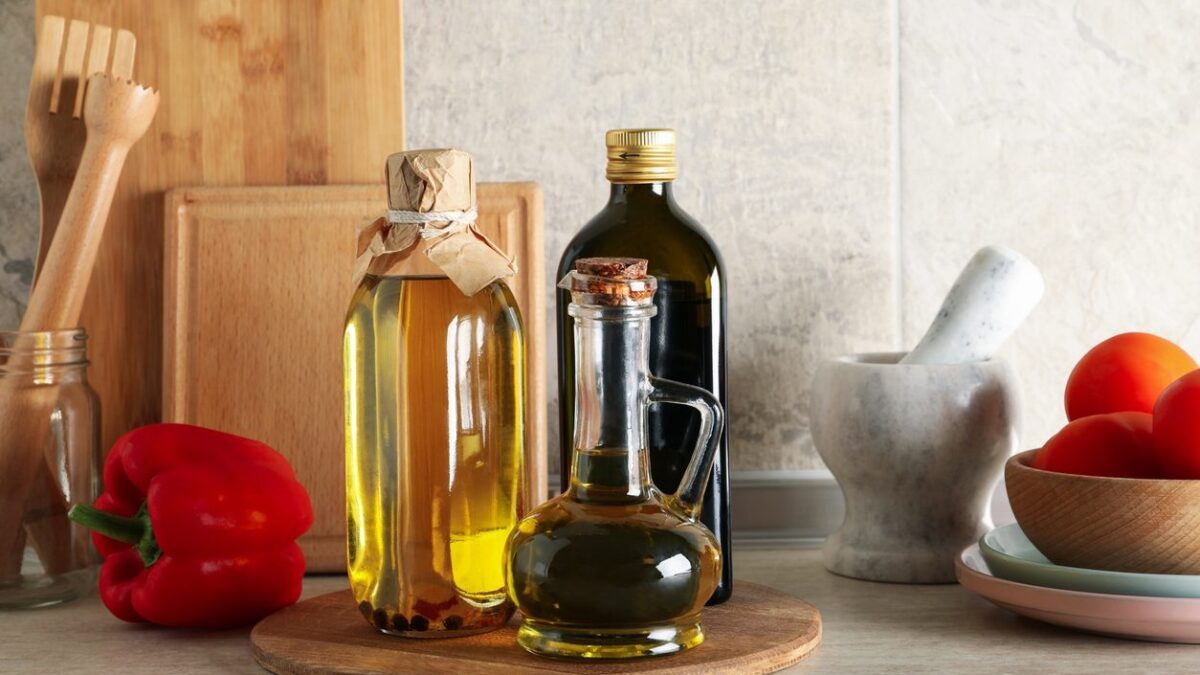
The quintessential condiment of the Mediterranean diet, extra virgin olive oil is one of the most common household items, a staple product useful both as an ingredient and as a finishing touch before bringing the most diverse dishes to the table. We know we must choose quality oil to fully enjoy its nutritional benefits, as well as its flavors and aromas, and that precisely for this reason, purchasing it represents a small "investment" when shopping: despite being a popular food, it is by no means cheap. Storing it properly, therefore, becomes essential for the success of recipes, to avoid food waste, and to save money: it is no coincidence that spilling oil (or salt) is still considered bad luck, as the superstition is linked to the economic damage that was once suffered by accidentally losing it.
How Long Does Extra Virgin Olive Oil Last
Let's start by saying that oil is a product that should be consumed as soon as possible after pressing, as it best expresses all its organoleptic characteristics when it is still young or mature. What does this mean? The faster the clock moves forward, the more the product loses quality: in short, it does not mature like some types of cheese, nor does it improve in quality like wines made for aging, made to last in the cellar. Extra virgin olive oil is made by pressing fresh olives, and its traditional processing does not include fermentation processes that shape its unique profile: its slow and progressive transformation does not improve it, but, on the contrary, worsens it, flattening its aroma and flavor, degrading its nutritional composition until it becomes rancid, no longer good. Compared to other products, the deterioration of extra virgin olive oil does not equate to its being dangerous to your health: you don't feel ill if you use old oil, it simply loses its functional value. With this introduction, let's answer the question: consume it within 12 months of packaging to enjoy all its benefits, 18 months at most before it begins to decline. In practice, the advice is to use the oil within the year it was produced, then purchase the following year's. To help you understand, the packaging usually indicates the minimum durability (TMC), which is not an expiration date, but rather the limit within which the oil maintains its properties intact (up to 24 months), accompanied by the harvest date.

How to Best Preserve Extra Virgin Olive Oil
We've seen that olive oil doesn't expire like yogurt, but that doesn't mean it should be considered a shelf-stable product. On the contrary, it's a very delicate food that requires careful storage to avoid spoilage. Many factors determine its shelf life, including its chemical composition and the cultivar, or variety of olive used as the raw material. How it's stored also makes a difference.
The Place
The greatest enemies of extra virgin olive oil are air, light, heat, and humidity. The kitchen pantry (where the heat from the stove or oven doesn't reach), a closet, or a cellar (obviously not too humid) are suitable for this purpose, because they are cool, dry, and dark: the ideal temperature is between 53°F/12°C and 64°F/18°C.
The Containers
Don't underestimate them: the best containers are classic dark glass bottles, tin or stainless steel containers (of varying capacities), as well as ceramic ones, a material used in ancient times (particularly in the form of large amphorae) and which today is increasingly popular for creating designer objects, perfect for serving oil at the table. Although different, they all have in common the ability to isolate extra virgin olive oil from external agents that could damage it: once used, seal the containers well, because the liquid tends to oxidize on contact with oxygen, in addition to absorbing environmental odors, which alter its aroma and flavor.
Some Advice
One tool that can be useful to this cause is the so-called anti-refill cap, required by law in the restaurant industry: it is an anti-fraud accessory, specifically designed to prevent a given bottle from being refilled with another oil of inferior quality, but passed off as the same product indicated on the label. It prevents fraud and at the same time its technology makes it safe from the standpoint of effectiveness for preserving the product at home, as it allows very little air to pass through. If you like oil cruets, however, choose a medium-sized one, with a small capacity of around 250 ml and made of stainless steel: although they are attractive and easy to find (perhaps in sets for vinegar, salt and pepper), they are most often made of transparent glass and do not have an airtight seal. Forget plastic: whether PET or PVC, it is a material not permeable to light and air, and being porous, it can absorb both food odors and those of cleaning detergents.

Can You Freeze Extra Virgin Olive Oil?
Technically, extra virgin olive oil can be frozen without any particular problems. Contrary to what you might imagine, low temperatures do not alter its composition: the oil contains mainly triglycerides, various fatty acids, with unsaturated ones (such as oleic acid) prevailing in this case, and antioxidants, including vitamin E, tocopherol, and polyphenols. When it begins to freeze (starting at 50°F/10°C, so even in the refrigerator), the fats gradually crystallize, resulting in a change in consistency: becoming solid or semi-solid, the oil becomes cloudy and appears viscous. Once brought back to room temperature, it returns to a liquid, maintaining its characteristics almost unchanged, but you need to pay attention to some details: the oil can increase slightly in volume (so it needs a container suitable for the freezer and not filled to the brim), after melting it tends to go rancid more quickly, it can have different textures, due to the various compounds that freeze at different temperatures, with denser parts that settle to the bottom and it cannot be re-frozen, or repeated thermal shocks would ruin it prematurely. Putting the oil in the freezer, but also in the refrigerator, while a possible option, is therefore less practical and more complex than the conventional one: it is not worth it.
How to Tell if Your Oil is Still Good
Stocking up on extra virgin olive oil seems like a good idea, but it's actually the most common mistake you can make. Leaving a large quantity unused for a long time means risking an increasingly poor product. Furthermore, being such a sensitive food, if something goes wrong (excessive exposure to air, light, heat, humidity), oil spoils well before 12 months. Fortunately, it's easy to spot spoiled oil.
- Start by checking the context of your storage: some doubts may arise if you notice the damaged cap, with a closure that is not sealed properly, or if you realize that you have left the bottle for a long time on the shelf above where the oven is built in, with the heat spreading.
- At this point, bring your sense of smell into play as the first indicator: simply put, rancid oil “stinks” because it gives off an odor of rotten dried fruit, mold, paint, which is immediately unpleasant to the nose, whereas when it is good it is fresh and fragrant.
- Then proceed with tasting. Remember that depending on the cultivar and product (single-origin or blend), the oil can be bitter or sweetish, with pleasant spicy notes from the polyphenols. The longer it ages, the more rounded and gradually less intense the flavor becomes. The alarm bells ring when you notice a stale and unpleasant aftertaste, where the sensation of oiliness prevails on the palate.
Instead, rely less on color and texture: there are oils that are more greenish and others that tend towards yellow, some maintain a clearer texture, while in others (for example raw, unfiltered ones) a certain cloudiness is typical due to the microparticles of pulp remaining inside.

