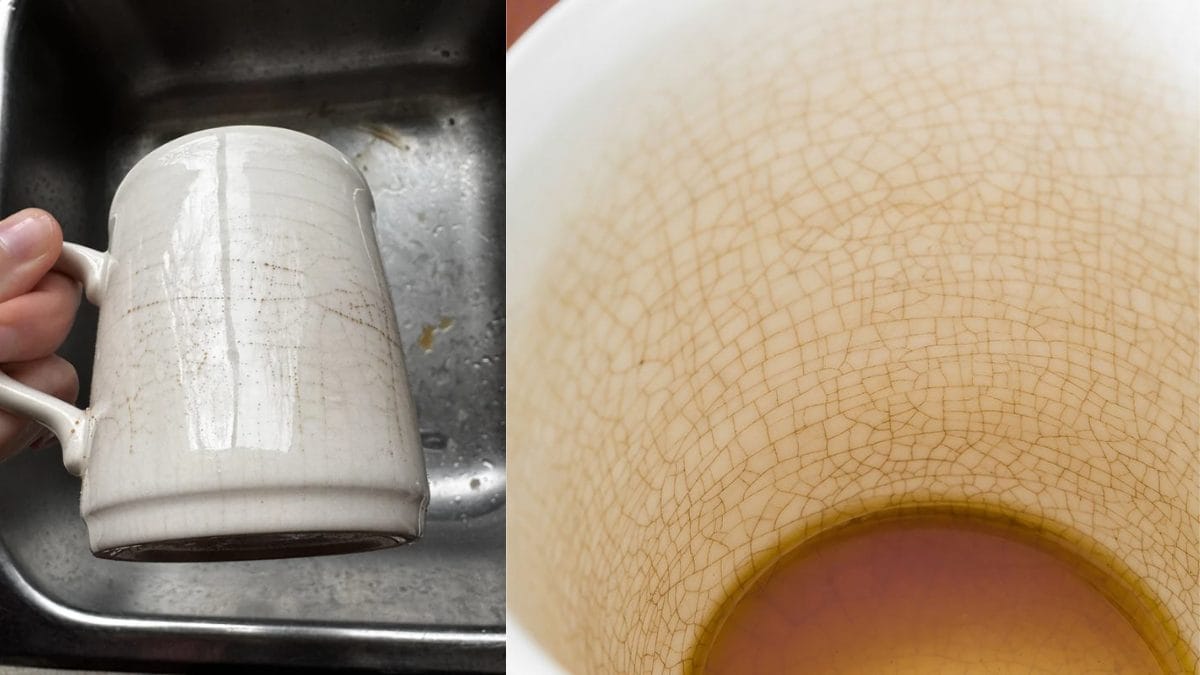
Every coffee and tea lover has the mug. It is the perfectly weighted piece of ceramic that fits flawlessly in your hand, holds just the right amount of caffeine, and has been a silent partner in your morning routine for years. But after countless trips through the dishwasher and years of scraping spoons, you might notice a faint snaking line across the bottom, or a network of spiderweb-like hairline cracks on the interior. Because it still physically holds liquid, the temptation is always to ignore it and keep brewing.
Unfortunately, food safety experts are here to break your heart. While it might seem overly dramatic to retire a beloved cup over a seemingly superficial blemish, drinking from a cracked mug introduces a trio of hidden health and physical hazards that simply aren't worth the risk.
How Cracks Harbor Bacteria
The smooth, glossy finish on the inside of your mug isn't just for aesthetics; it is a high-temperature glass barrier called a glaze. Its primary job is to seal off the raw clay body beneath it, rendering the vessel entirely non-porous and food-safe. When that glaze develops a structural crack or undergoes "crazing"—the industry term for that web-like pattern of micro-fractures—the protective seal is officially broken.
Every time you pour a splash of milk, creamer, or sugar into your hot drink, those organic materials seep deep into the compromised crevices. Because these cracks are incredibly microscopic, standard dish soap and a kitchen sponge cannot physically reach them to scrub them clean. Even a high-heat dishwasher cycle struggles to sanitize the interior porous clay once it has absorbed liquid. Over time, these tiny faults turn into a microscopic breeding ground for bacteria and mold, quietly contaminating every fresh cup you pour.

Lead and Heavy Metal Leaching
If your favorite mug happens to be a thrifted vintage treasure or an artisanal piece from an unvetted source, a cracked glaze becomes an even more urgent issue. Before modern manufacturing regulations were strictly enforced by the FDA, heavy metals like lead and cadmium were routinely used in ceramic glazes to achieve vibrant colors and smooth finishes. An intact glaze keeps those toxins safely locked away from your beverage. However, once the surface is fractured, hot and highly acidic liquids—like a rich pour-over coffee or a lemon-infused tea—can accelerate the leaching process, allowing heavy metals to bleed directly into your drink.
Sudden Structural Failure
Beyond the unseen chemical and microscopic threats, there is a very immediate physical danger to keeping a damaged mug in rotation. Ceramics are highly sensitive to thermal shock. When you pour boiling water or piping-hot espresso into a room-temperature mug, the material rapidly expands. If the structural integrity of the ceramic is already compromised by a deep crack, that sudden temperature swing can act as the final breaking point. The mug can catastrophically shatter or lose its handle mid-sip, spilling scalding liquid all over you and resulting in severe burns or painful cuts from flying glass shards.

How to Gracefully Repurpose Your Favorite Mug
You don't necessarily have to toss your beloved cup straight into the trash, especially if it carries deep sentimental value. You just need to strip it of its kitchen duties and give it a second act.
- The Desktop Organizer: Use the mug on your desk to hold pens, markers, or office scissors.
- The Windowsill Planter: Drop a small nursery pot with drainage holes inside the mug to turn it into a chic planter for a small succulent.
- The Vanity Cachepot: Keep it on a bathroom counter or vanity table to corral makeup brushes, cotton swabs, or hair clips.
;Resize,width=767;)
