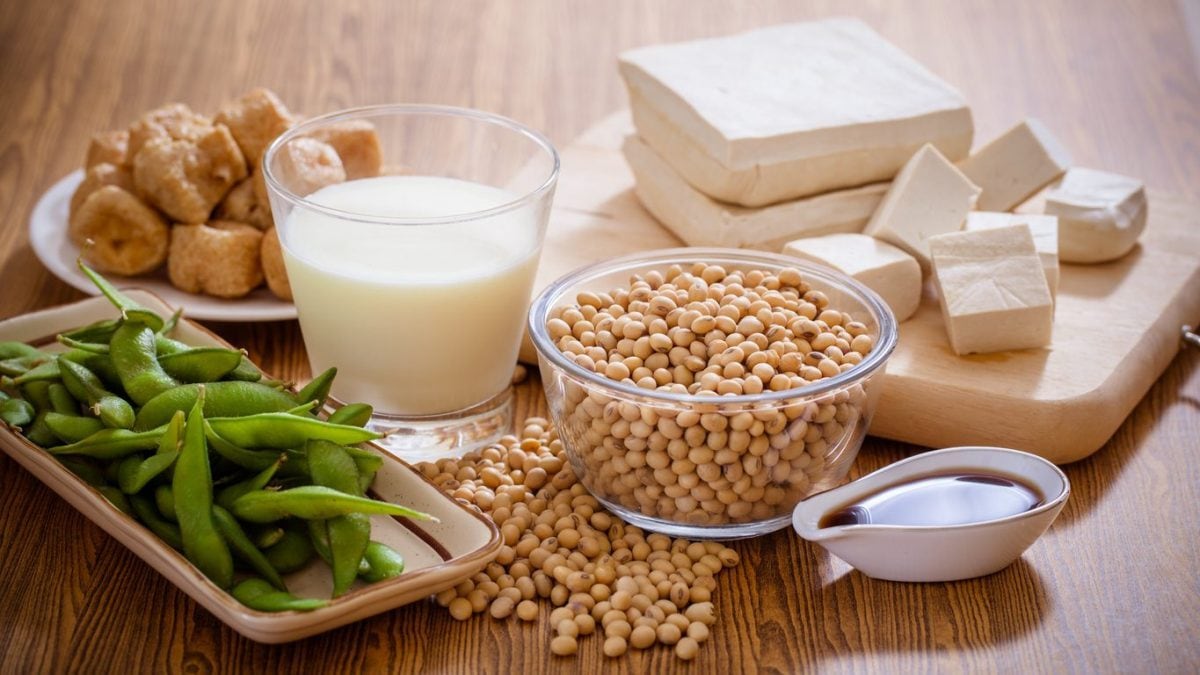
Among the most discussed and controversial foods in the global gastronomic landscape, soy is a particular type of legume: belonging to the same family as beans, chickpeas, and lentils, it is distinguished by a much more nutrient-dense composition and greater protein content. Of Asian origin, this ingredient, often associated with vegetarian and vegan diets, has over time earned a prominent place in our daily menus, allowing us to replace—or simply reduce—animal proteins without too many sacrifices.
However, many doubts and myths still surround its consumption: is soy good or bad for you? Can it be consumed by those with thyroid problems or who are pregnant? To answer these questions, we consulted Dr. Simone Gabrielli, biologist and nutritionist, who helped us clarify the issue once and for all. Let's discover together the real benefits of this legume, any potential contraindications, and how to incorporate it creatively and, above all, safely into everyday cooking.
What is Soy?
Among the most frequent doubts on the web is the one regarding its nutritional composition: is soy a legume or a cereal? The answer is unequivocal: soy is in all respects a legume, belonging to the Fabaceae or Leguminosae family, just like beans, chickpeas, and lentils. The misunderstanding often arises from the fact that soy is transformed into flour or used to produce drinks, snacks, and substitutes that, in the popular imagination, replace cereal derivatives or dairy products.
Originating from East Asia, soybeans are available on the market in different types, each with specific characteristics and uses:
- Yellow soybeans are the most widespread, cultivated, and traded variety globally. They are the essential raw material for the production of almost all industrial and traditional products, such as soy milk, tofu, soybean oil, tempeh, miso, and soy sauce.
- Black soybeans, a rare and prized variety grown mainly in China and Japan; with an intense and aromatic flavour, they are used to prepare black miso, natto and douchi, typical Asian dishes.
- Green soybeans, or mung beans, are a legume native to India that produces the famous soybean sprouts. They have a sweet flavor and a crunchy texture and are used in salads, soups, oriental dishes, and desserts.
- Azuki beans are typical red beans grown throughout Asia. With their characteristic dark reddish color and very small size, they have a sweet and delicate flavor, ideal for making anko , the jam used to fill the famous dorayaki.

Soy's Nutritional Properties and Benefits
Compared to other legumes, soybeans are distinguished by a much more nutrient-dense composition. They are, in fact, the queen of this category for their protein content: with 36 grams of protein per 100 grams of product, they boast a very high protein content.
"But it's not just the quantity that's surprising, but the quality," explains Gabrielli. Soy stands out from other legumes because it contains all the essential amino acids. Plant-based foods are usually lacking in some amino acids, and to make a meal more complete and nutritious, it's important to combine them with other ingredients: the most classic example is legumes combined with grains, such as rice and beans or pasta and peas, which together complement each other.
"These require you to ‘fit together,' while soy provides them all together, just like meat or eggs," the expert continues. Furthermore, it is a veritable goldmine of micronutrients: a serving of dry soy contains almost the same amount of calcium as a glass of cow's milk, as well as excellent doses of potassium, phosphorus, iron, calcium, and B vitamins.
Additionally, 100 grams of dried soybeans provide approximately 400 calories, 19 grams of fat and 12 grams of vegetable fibre.
The main benefits are reflected on three fronts:
- heart protection; thanks to its mix of fibers and its particular proteins, soy not only helps manage and reduce blood cholesterol, but also contributes to regulating blood pressure;
- Intestinal health: The excellent amount of plant fiber increases the feeling of satiety, useful for weight control, and helps the intestines function with the right regularity. It is also very useful for those who are lactose intolerant, as its derivatives avoid giving up valuable nutrients like calcium.
- An ally for women: soy is the main dietary source of phytoestrogens, i.e. plant hormones that mimic the action of our own hormones, and its regular consumption has been associated with protecting bones, preventing osteoporosis, and also with reducing hot flashes during menopause.

Contraindications and Warnings
The potential side effects of soy have been widely discussed in recent years, and this food has generated much confusion and even unwarranted anxiety. The first myth to dispel is the one concerning the thyroid. It's often said that it's a powerful endocrine disruptor, so much so that several endocrinology centers recommend against consuming soy milk or yogurt while taking medications to treat hypothyroidism.
"This alarm was raised by very old studies conducted in laboratories or on animals administered massive and unrealistic doses of isolated isoflavones. Under those extreme conditions, it was observed that these substances could interfere with the enzyme that produces thyroid hormones," explains Gabrielli. In real life, therefore, if a person has a normal iodine intake and eats soy—from organic farms —in the standard portions recommended by guidelines, the problem does not arise.
"The misunderstanding persists because medical wisdom advises those suffering from hypothyroidism and taking levothyroxine to space out soy-based meals from taking the drug, to avoid interfering with intestinal absorption. This has led people to mistakenly conclude that soy is harmful to the thyroid," the expert concludes.
Another false myth is that it can interfere with testosterone, the main male sex hormone, also present in smaller quantities in the female body. The misunderstanding stems from the word "phytoestrogens," a term immediately associated with female hormone therapy. In reality, these molecules mimic the action of our own hormones, but at a thousands of times lower intensity, and do not have the biological power to alter male virility.
"The myth has been fueled only by very rare, isolated clinical cases of individuals who consumed extremely high quantities of the product (such as liters and liters of soy milk per day), which do not constitute normal consumption," the nutritionist specifies.
The fear that soy can cause breast cancer stems from the same confusion about isoflavones. The most recent and accredited scientific studies have amply demonstrated the opposite: these substances do not fuel the disease but, on the contrary, appear to have a preventative and protective effect.
Its consumption is safe during pregnancy: the FDA has strictly regulated the amount of isoflavones that can be consumed through supplementation, establishing that one should never exceed 80mg per day. "This amount, below which no adverse effects occur, can only be exceeded with supplements, avoiding soy and its derivatives," the doctor points out.
For newborns, however, special formulas based on this legume should be used only after consulting a pediatrician: soy is included in the list of main allergens and those who are sensitive must pay the utmost attention.
How often can we eat soy? As part of a healthy and varied diet, it can be included a couple of times a week as an alternative to meat, fish, eggs, or cheese. A serving of dry soy is about 50 grams, corresponding to about 150 grams if boiled, while a standard serving of tofu or tempeh is 100-150 grams, depending on your energy needs.

How to Use Soy in Cooking
The great value of soybeans lies in their exceptional versatility. A versatile legume with a rather delicate flavor, they perfectly absorb the aromas of the ingredients they're paired with. Dried yellow beans should be soaked in cold water, preferably with a piece of kombu seaweed, and then boiled for a long time, just like beans and chickpeas. Once cooked, they can be used to enrich salads, soups, and broths, complemented with a source of complex carbohydrates (rice, potatoes, or croutons), or to make delicious vegetable burgers or meatballs.
Also known as "vegetable cheese," tofu is one of the most consumed and popular soy products in the world. Made by coagulating a milky liquid from yellow soybeans, it's rich in protein, making it a great alternative to meat and fish for vegetarians, vegans, or anyone who simply wants to reduce their meat and fish intake.
Easily digestible and relatively low in calories, it can be consumed by anyone, provided it's organically grown (so always read the labels). Its neutral, slightly bland flavor, which isn't universally beloved, is actually its winning feature: when properly marinated with spices, herbs, lemon juice, soy sauce, or tamari, it reveals a very distinctive personality. Once well-seasoned, it can be sautéed or baked in the oven for a crispy crust, or used to make delicious medallions.
Obtained from the fermentation of soybeans, tempeh is a traditional Indonesian product, rich in vegetable proteins, fiber, and minerals, particularly iron, calcium, and potassium. Less well-known than tofu, but equally versatile, it has an earthy, slightly nutty flavor and a firm, compact texture, perfect for colorful and original vegetarian dishes. You can grill it on a griddle, for example, or coat it in a rich breadcrumb coating and then fry it in hot oil: this way, you can obtain fragrant, tender morsels to accompany grilled vegetables and a slice of whole-wheat bread.
Edamame are soybean pods harvested during the summer, when still unripe and soft. They can be blanched or steamed and enjoyed as an appetizer or snack, seasoned simply with a pinch of salt. Alternatively, you can add them to your rice or other grain and vegetable bowls, a soup, or a salad with lamb's lettuce, cherry tomatoes, avocado, and almonds.
Rich in proteins and gluten-free, soy flour can be mixed with other flours to make bread, focaccia and various baked goods, thus increasing their protein content, while the dehydrated soy morsels, once rehydrated in hot vegetable broth, become the perfect base for tasty, carnivore-friendly vegetable ragùs and stews.
In conclusion, soy can be safely included in a varied and balanced diet. If consumed frequently, it's recommended to choose fermented and sprouted soy products (such as sprouts, tempeh, miso, and tamari) from organic farming. This is because fermentation and sprouting inactivate the antinutrients phytates, which reduce the absorption of certain minerals, including calcium, magnesium, copper, iron, and especially zinc.
As always and for any food, quantity and frequency of consumption (as well as the quality of the product chosen) definitely make a difference.
;Resize,width=767;)
