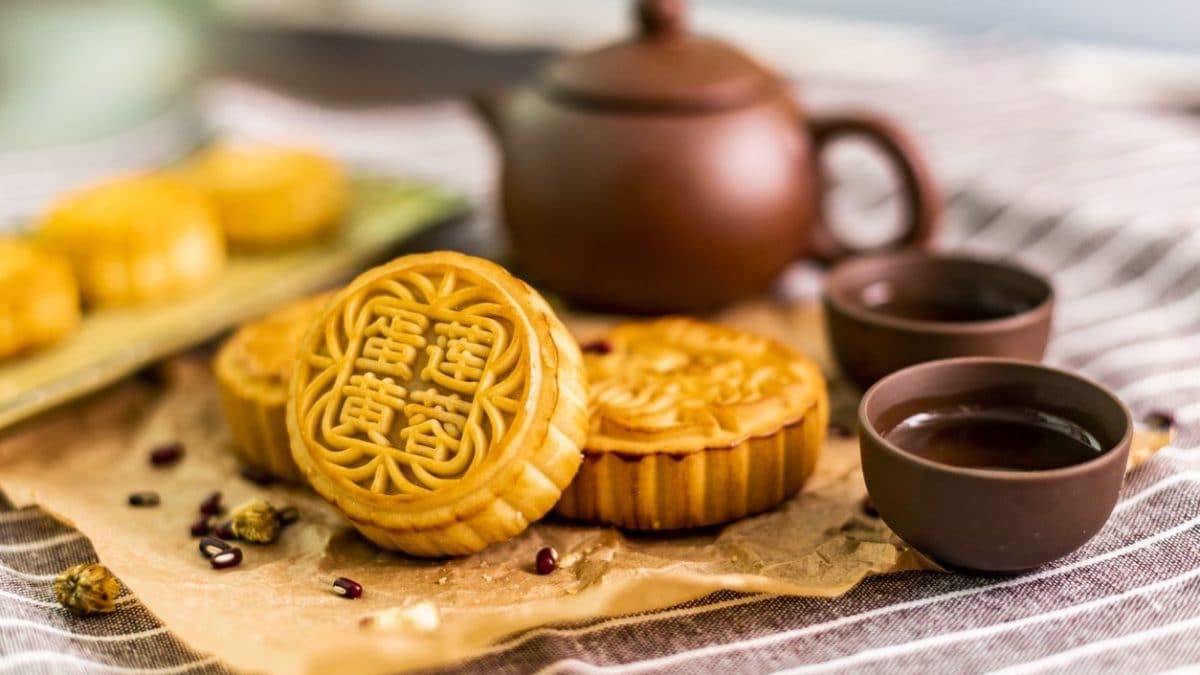
When the moon is round, bright, and shining, and reaches its zenith in the autumn sky, millions of people in China and other Asian countries stop to celebrate. Here, with a gaze turned upward, tradition dictates that mooncakes are eaten. It is the sacred moment of Zhongqiu Jie – 中秋節 – or the Mid-Autumn Festival, an Asian festival that combines harvest celebration, ancestral worship, legends, and family ties. A truly unique and peculiar custom that deserves further exploration; let's discover it together.
What is Mid-Autumn Festival, and When Is It Celebrated?
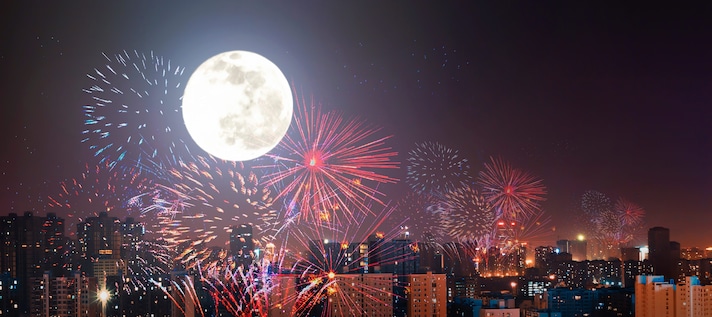
Before seeing how mooncakes are made and what they taste like , we need to understand why they are eaten exclusively during this holiday. It's called the Mid-Autumn Festival, also known as the Moon Festival, and is celebrated on October 6th, the fifteenth day of the eighth month of the Chinese calendar, as established during the Song Dynasty between 960 and 1279 AD. To fully understand its origins, we need to travel back in time. The roots of this holiday are ancient: already three thousand years ago, in Imperial China, under the Tang Dynasty, lunar worship spread even among the aristocracy, who imitated the imperial court by organizing banquets, dances, and songs under the light of the full moon. This celebration served to ensure a good harvest throughout the following year.
However, it was during the Song Dynasty that the holiday took on the form of a truly institutionalized festival. Since then, the fifteenth day of the eighth month of the lunisolar calendar became the official time to celebrate the moon, a symbol of prosperity and harmony. This tradition has never ceased and, even today, represents a special occasion of family unity for the Chinese (and Asians in general).
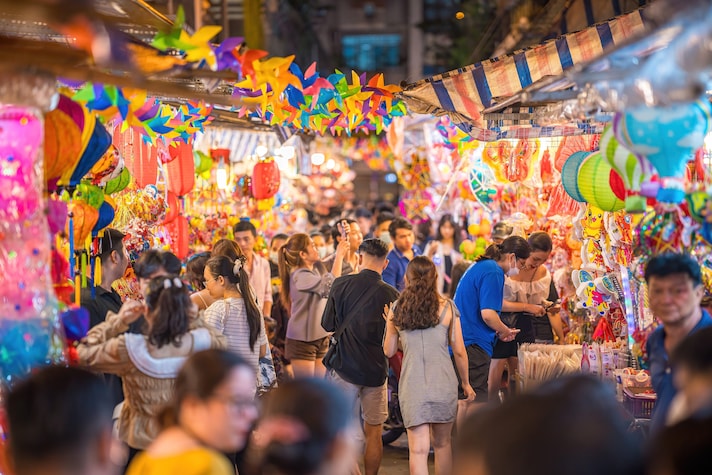
Outside of China, the holiday has taken on different connotations: in Vietnam, for example, it takes the form of a large children's event with colorful lanterns and parades. In South Korea, Japan, Singapore, Malaysia, and the Philippines, the lunar calendar is honored with celebrations that blend ancient rites and local reinterpretations.
In our country, the festival falls between September and October, close to the equinox, and in recent years it has become increasingly popular in the West as well. The iconic mooncakes are now easily found in our cities too, often paired with a cup of oolong tea, an ideal bridge between Asian tradition and our daily rituals.
Mooncakes, The Sweet Secrets of The Moon
We've arrived at the highlight of the festival: mooncakes. These are small, round or square, individual cakes that symbolize the full moon and the sense of family togetherness. They are popular in all countries that celebrate this holiday and are distinguished by their surfaces decorated with carved stencils depicting auspicious motifs, propitiatory phrases, or the logo of the pastry shop that makes them. What makes them unique, however, is the filling, which varies from area to area depending on regional customs. Lotus seed paste, sweet red beans, dried fruit, and creams mixed with green tea and chocolate are all popular. In many versions, these mini cakes also include a whole egg yolk, which represents the moon.

When we talk about mooncakes, however, we're not just referring to refined desserts—quite the opposite. During the Mongol rule of the Yuan Dynasty, these sweets were used as a tool for conspiracy. It is said that rebels led by Zhu Yuanzhang, the future founder of the Ming Dynasty, inserted secret messages inside the cakes to incite the population to revolt. In this way, thanks to a dessert, the call to action was spread that would lead to the fall of the Mongols and the rise of the new dynasty in 1353.
Chinese Legends About the Moon Festival
Making this festival even more magical and meaningful are the legends surrounding it. It contains ancient tales that have been passed down for centuries and are still reenacted during celebrations today. These stories speak of impossible loves, broken desires, and extreme sacrifices, which help give soul to one of Asia's most heartfelt celebrations. Let's explore them together.
1. Hou Yi and Chang'e: Love Separated by The Moon
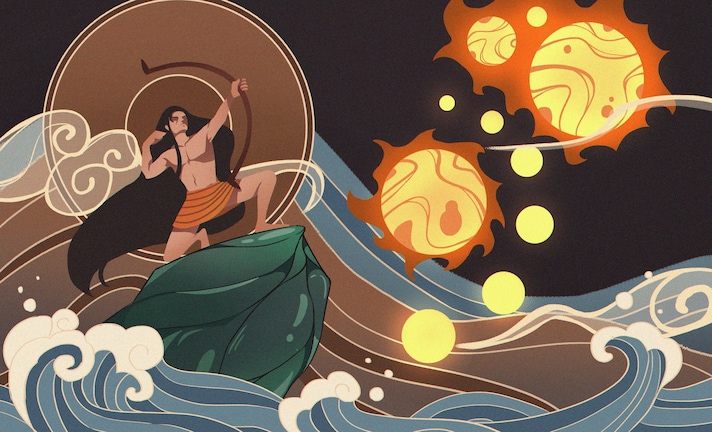
Of the three Asian legends told about the Mid-Autumn Festival, this is perhaps the most famous. Its protagonist is Hou Yi, an infallible and cunning archer who saved the earth by shooting down nine burning suns and, in return, received an elixir of immortality. He fell in love with Chang'e, but since his bride was a "commoner," he decided not to drink the elixir so he could grow old with her. A traitor attempted to steal it from her room, and Chang'e herself drank it to protect him. Once she drank the potion, the woman was transported forever to the moon, and from then on, every autumn night, Hou Yi sets a table under the sky in the hope of seeing his beloved again.
2. Wu Gang and The Eternal Tree
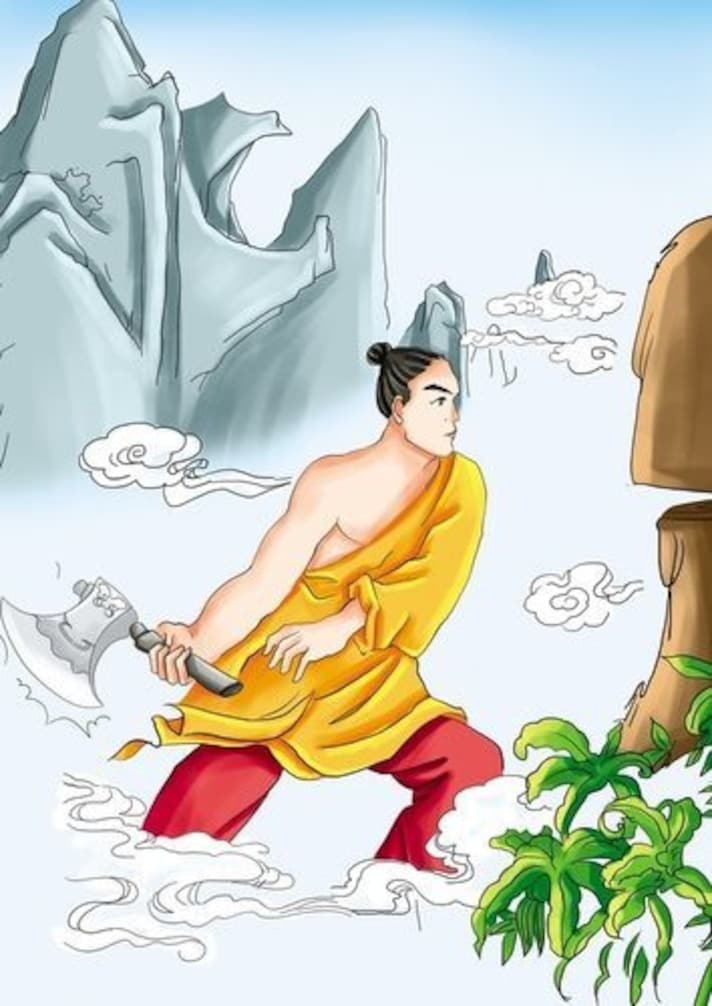
Another myth passed down for centuries in China tells of Wu Gang, an ambitious but lazy man who dreamed of immortality without deserving it. To punish him, the Celestial Emperor condemned him to an endless task: cutting down a gigantic tree planted on the moon. Each blow of the axe, however, was nullified by the "magic" of the trunk, which instantly reformed itself. It is still said today that Wu Gang is up there, on the moon, tireless and defeated, and that the tree's shadow is visible on full moon nights.
3. The Sacrifice of The Jade Rabbit
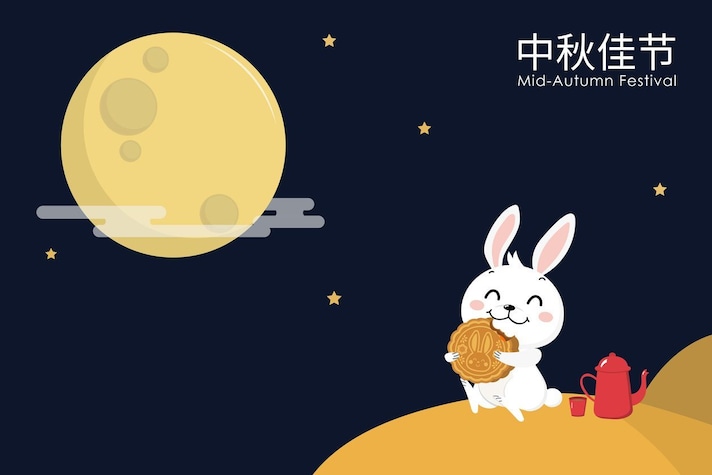
The protagonist of the last legend is a rabbit, a lunar symbol in almost all Asian countries. It is said that, tested by an old beggar (actually the Celestial Emperor), the rabbit, having nothing to offer, threw itself into the fire to offer itself as food. Moved by its sacrifice, the emperor took it to the moon where, transformed into jade, it lives forever and is busy preparing an elixir of eternal life.

