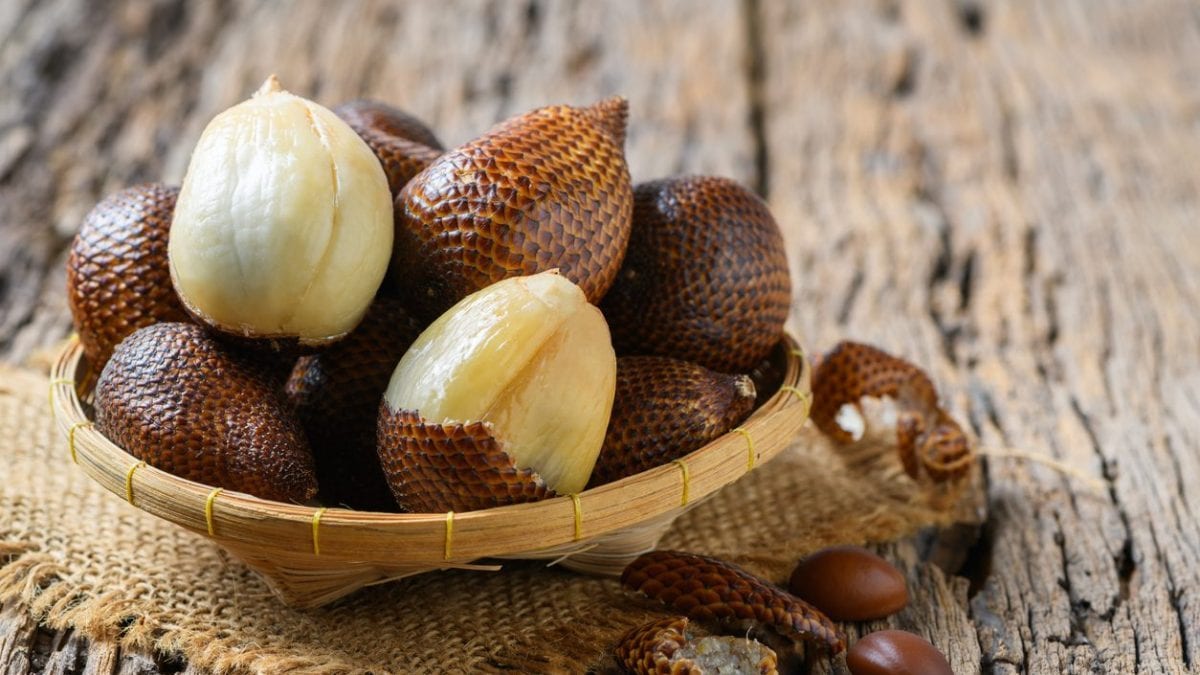
The world of exotic fruit always holds pleasant surprises for those who love cooking, but not only. Curious tasters, among jackfruit, carambola, and durian, may soon include salak, known as snake fruit, on their list. But there's no need to fear: the term doesn't refer to any kind of poison or danger. The name refers to the peel, which appears scaly like that of a reptile. The similarities end there, because the pulp is fragrant, firm, sweet and tart at the same time, very pleasant and popular in Indonesia, its homeland, where it is eaten fresh or as an ingredient in sweet and savory preparations. Let's get to know it better.
What is Salak?
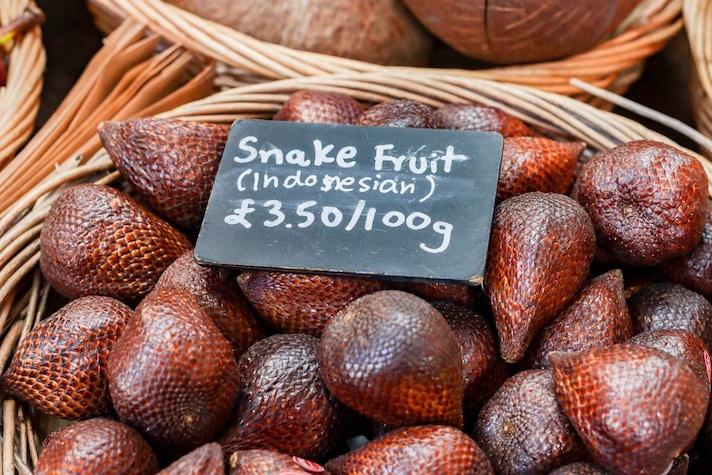
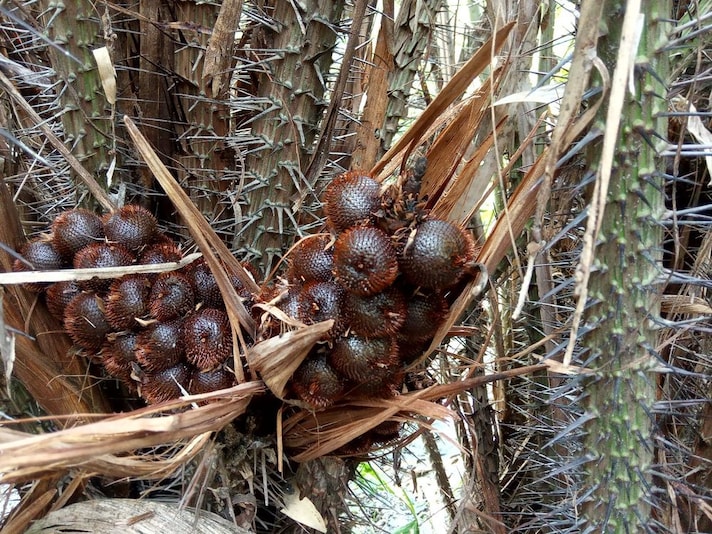
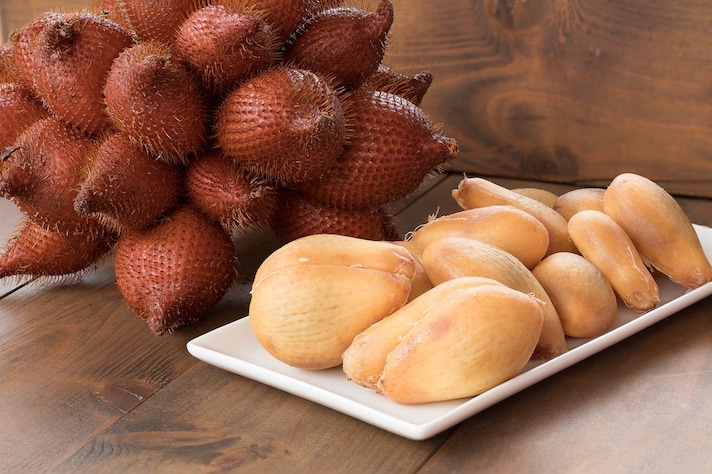
Widespread in Asia, especially Indonesia, salak is the fruit of the Salacca zalacca, a palm tree native to Indonesia – particularly the islands of Java and Sumatra – which belongs to the Arecaceae family: a rather low-growing plant, with very long leaves – reaching up to 6 metres – and which produces characteristic oval-shaped, slightly pointed fruit clusters, similar in size to that of a fig. On the outside, it has a thin, rather tough skin, composed of overlapping copper brown scales that immediately bring to mind snakeskin: hence the international name of snake fruit.
Once the casing is removed, we find the pulp: it is fleshy, compact, ivory-white, covered by a light, almost transparent skin (which does not need to be removed) and contains three different sections, which could be compared to large cloves of garlic. Inside, just like a Russian doll, a large, dark, hard, and inedible seed appears. Only the pulp, in fact, is edible: compact and crunchy, it is sweetish and aromatic, tart, with notes reminiscent of pineapple, banana, citrus fruits, and honey. Important: we are talking about a plant that is a true star of the Indonesian area, and there are more than 30 different cultivars. One of the most famous is the Balinese Gula Pasir, among the most prized thanks to its small, rounded, juicy, and particularly sweet fruits.
How Do You Eat Snake Fruit?
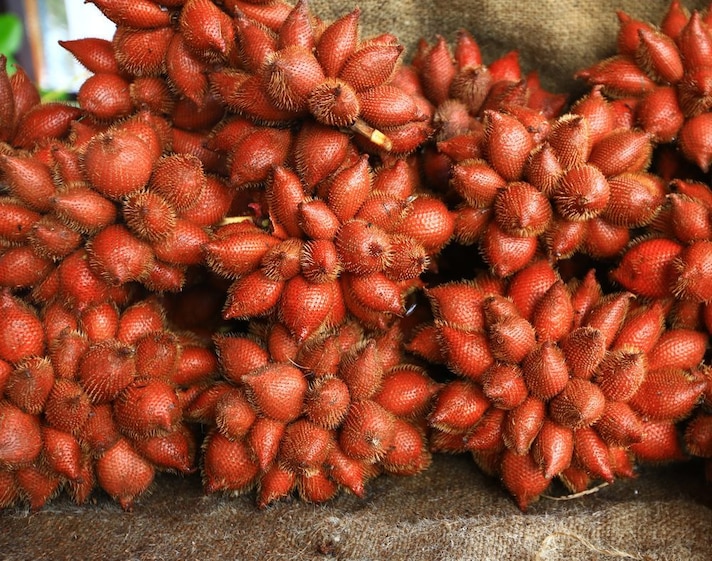
It's easy to come across salak in Bali's street markets: you can find it in bunches or sold individually in crates and baskets. Much like our apples, it's one of those versatile fruits that can be eaten fresh, peeled, and consumed as a snack because it's very thirst-quenching. We mentioned earlier the toughness of its peel, but being thin, it's easy to remove: grab the snake fruit by the narrowest part, gently twist it left and right, and the peel will crack, making it easier to remove completely. Always fresh, salak enriches tropical fruit salads, perhaps paired with mango and pitaya (another spectacular exotic delight, also known as dragon fruit). For delicious recipes, it can be sliced and fried, dried, made into chips, or caramelized, but also blended into smoothies —for example, with coconut milk—or pudding-style desserts, paired with spices like cardamom. In the savory world, it is used to flavor curries to pair with meat and fish or cooked in a stir-fry style in a pan, to add a tangy note and it is preserved in vinegar, to season salads.
Salak's Benefits
Snake fruit has traditionally been attributed several beneficial properties, which it shares with most tropical fruits. In particular, some relatively recent studies have helped highlight the presence of antioxidants that make it an excellent ally for the body, useful for fighting cellular aging. Low in calories (about 82 calories per 100 grams), rich in vitamins C, A (retinol), beta-carotene, and flavonoids, it strengthens the immune system and protects eyesight. Furthermore, thanks to its antioxidant content, it is believed to support heart health, preventing the development of diseases related to the cardiovascular system.
It is a food that is still little scientifically explored compared to other more globally known exotic specialties – such as pineapple and papaya – of which not only the virtues of the pulp are being evaluated, but also those of the peel, normally discarded and which contains compounds such as alkaloids, triterpenoids, saponins, tannins and flavonoids, potentially beneficial for therapeutic purposes, for, among many others, antibacterial, anti-inflammatory, antiviral and anti-aging functions.

