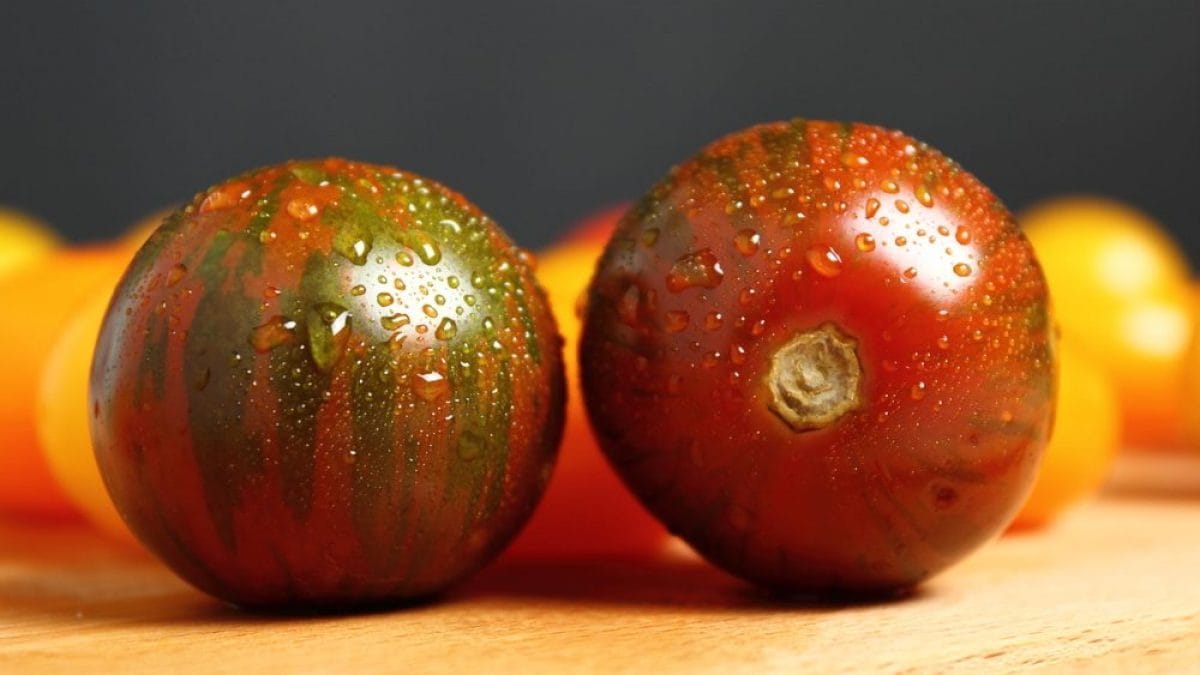
Tomatoes are the stars of sauces, salads, preserves, creative recipes, and iconic dishes in many culinary traditions. Beyond the more classic red varieties, in recent years, varieties with shades of green, yellow, and even black have become popular, lending a unique and original aesthetic touch to dishes. And it is precisely to this "eccentric" universe that zebra tomatoes belong, so called for their distinctive striped skin that resembles the animal's fur. These varieties often derive from selected crosses between plants, which attract attention for their unusual yet striking appearance. Furthermore, they also have unique organoleptic qualities that deserve to be enhanced in the kitchen. Let's discover them.
Zebra Tomatoes' Origins and Characteristics
Zebra tomatoes, as mentioned, were born thanks to the ongoing search for resistant, flavorful, and visually appealing cultivars suitable for both commercial and home gardening. We can say that their history began with Tom Wagner, a tomato and potato grower from Washington State. Since the 1950s, he has been experimenting with improving green tomatoes, which were very popular in the United States (just think of the fried green tomatoes from the movies), but whose ripeness was difficult to determine. The results came in 1983, when he added the seeds of the Green Zebra to his catalog, obtained by crossing three traditional varieties and distinguished by their typical dark green and yellow streaks. From this variety, which became famous, other versions have been developed over the years, depending on the shade of the marbling, such as the Red Zebra and the Black Zebra, seeds of which are easily found. From a botanical point of view, these are plants belonging to the common species Solanum lycopersicum: they have indeterminate growth (therefore they bear fruit several times), generally vigorous. They can also be grown in pots, requiring good exposure to the sun, regular watering and supports that facilitate their development. Harvesting takes place from May to October.
What do the fruits look like? They tend to appear in bunches, are medium to small in size, and are round or more elongated in shape (like cherries and cherry tomatoes). Their distinguishing feature is, of course, their striated skin, with longitudinal veins or lines that contrast with the background color, creating a striking aesthetic effect. However, this isn't just an ornamental effect, as the various shades can indicate the level of ripeness. Before seeing how they are used in cooking, let's take a closer look at the three main types.
Green Zebra
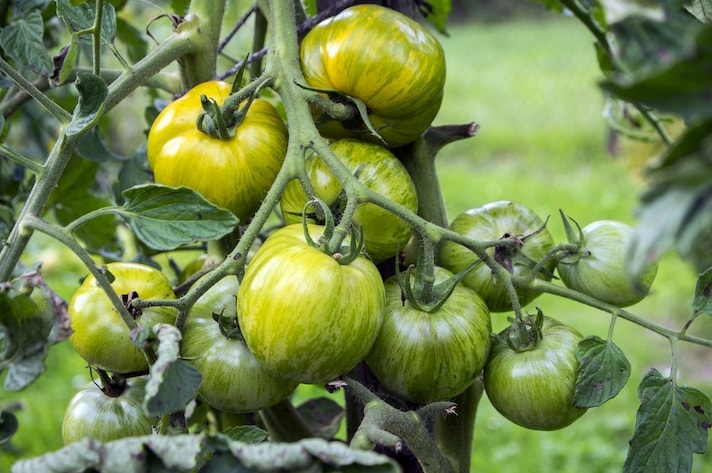
Shades of ice green, bright green, and yellow-orange (which appear when ripe) blend together in this beautiful tomato. It is the forefather of the striped varieties, with rounded, tart-tasting tomatoes that reach 100-120 grams each.
Red Zebra
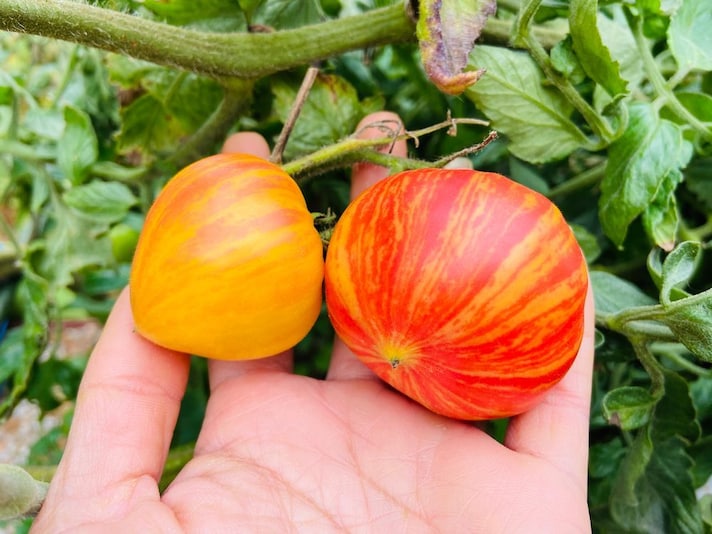
Equally interesting is the Red Zebra: from its name, we understand that it is a fruit with a red skin, with yellow-green marbling. The pulp is a deep red color, with a sweet-tart flavor and a shape comparable in size to tennis balls.
Black Zebra
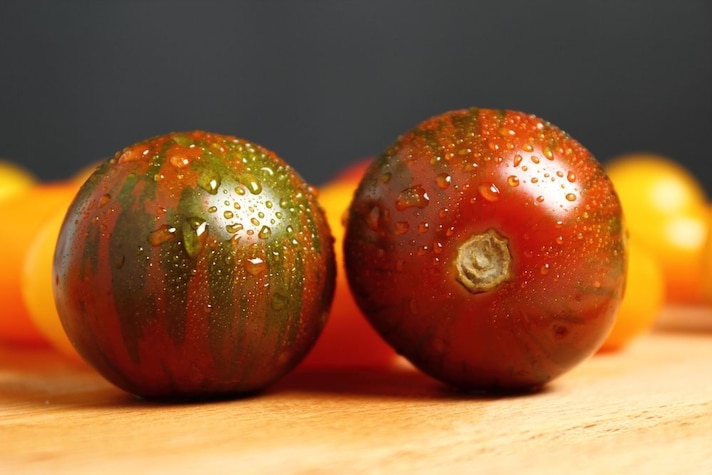
This variety is striking for its dark skin color: the base is usually red/purple, crossed by dark green streaks, while the inside is dark red and has a fleshy consistency. Jeff Dawson combined a Green Zebra and a Black Tomato in 2000. The flavor is refined, where the sweet note prevails over the acidic one, with a pleasant smoky aftertaste.
How to Use These Tomatoes in Cooking
Among the advantages of zebra tomatoes is not only their striking impact, but also their adaptability to a variety of preparations. To highlight their versatility and beauty, we recommend using them in dishes where the skin is still clearly visible: it is also important to note that it is also thin and resistant, thus providing a nice crunch. In summary: Green Zebra tomatoes are excellent in salads, carpaccio and bruschetta raw, because they have a slightly citrusy flavor that adds vivacity; Red Zebra tomatoes are also perfect raw, but their sweetness makes them perfect for being sliced and cooked in a pan or on the grill. Finally, Black Zebra tomatoes are a real all-rounder, from salads to crostini, even cooked as a grilled vegetable. Nothing takes away the possibility of making a sauce: focus on sauces with Red or Black Zebra tomatoes, perhaps combined with other seasonal vegetables, to season pasta dishes or light and fresh fish main courses.
;Resize,width=767;)
