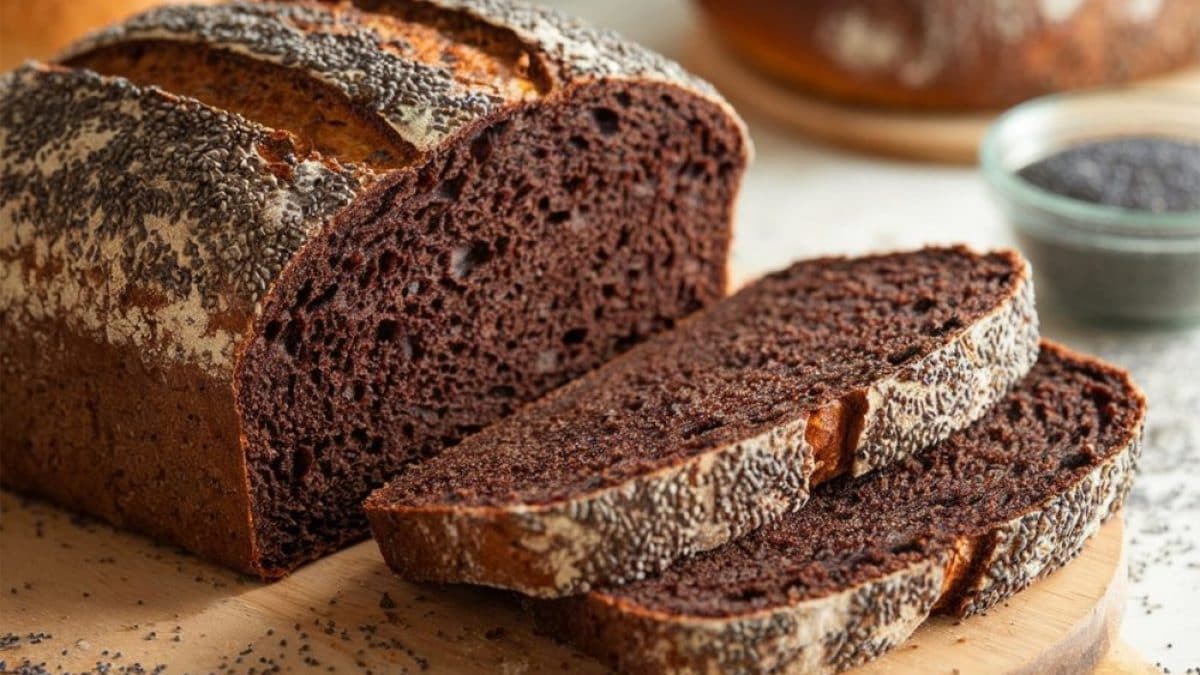
Whether you've ever made bread or not, you'll surely know what it's made of: water, flour, yeast, and possibly other additives. Here, however, we'll tell you about a type of bread that's not only traditionally made without yeast, but is also baked for a very long time, up to 24 hours. It's called pumpernickel, comes from Germany, and its name apparently derives from a popular and rather vulgar expression: we'll tell you about it here.
Where The "Slowest" Bread in The World Comes From
Originating in Westphalia, in western Germany, pumpernickel is a very dark rye bread, with a compact, moist texture and a slightly sweet, highly aromatic flavor. Its roots appear to date back to 1570, in the Haverland bakery, still in operation today, in the town of Soest. It was born as a humble food, designed to last a long time and provide substantial nourishment: it seems, in fact, that the town of origin, during the Middle Ages, was often exposed to long and frequent sieges. For this reason, pumpernickel served to guarantee energy and preservation, in a period in which resources were limited and food had to last a long time. Other stories, however, as reported by the Haverland bakery, tell that this bread was born by chance: due to the sudden outbreak of a feud that affected the town of Soest, the bread was forgotten in the oven and remained baking for 24 hours in an oven that had by then cooled down. The resulting bread, cooked at a low temperature, was not thrown away, but rather was appreciated for its particular aroma, flavor and above all for its long shelf life.
Why is It Called Pumpernickel?
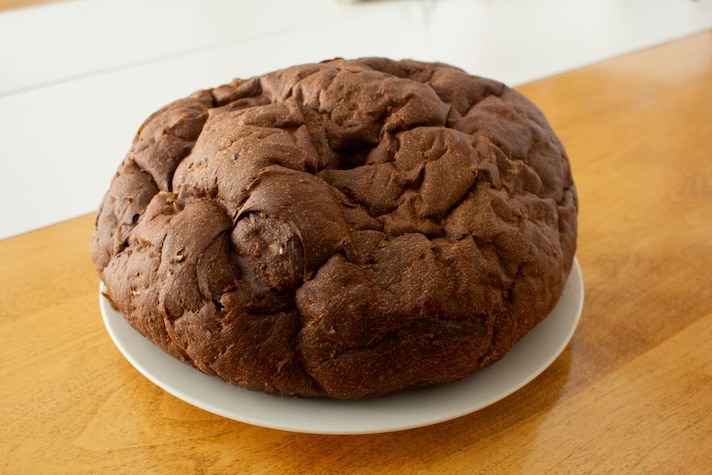
But even more interesting is the origin of its name, which still remains uncertain today and shrouded in various interpretations. One of the most widespread links it to a rather colorful popular expression: in some dialects, in fact, the term pumper indicates the sound of flatulence – probably due to the high presence of fiber in bread – while nikel is said to be a diminutive of the name Nikolaus, often associated with humorous figures such as elves.
There's also a legend of Westphalian origin involving a French nobleman, whom some identify with none other than Napoleon. It is said that, during a campaign in Westphalia, the emperor received, among the various gifts offered by the population, local bread. After examining it carefully, he stated: "C'est bon pour Nickel" or "it's good for Nickel," referring to the horse, thus despising the product. The inhabitants, however, unaware of the true meaning and interpreting the phrase as a compliment, believed it to be the French name for the bread itself, later transforming it over time into pumpernickel.
Pumpernickel's Particular Processing
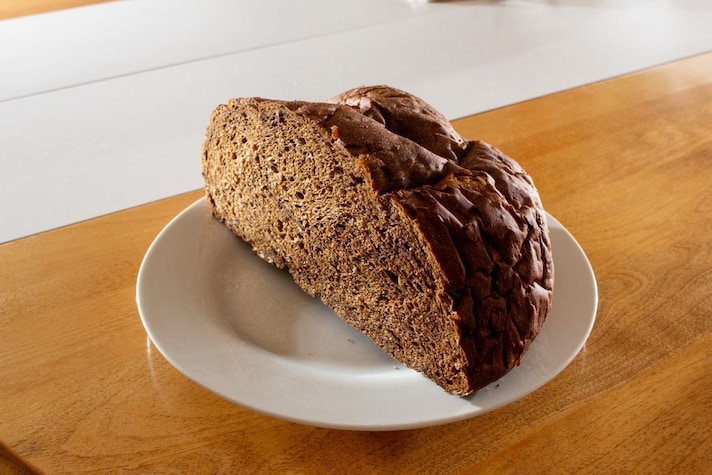
Beyond the mystery behind this bread's origins, what fascinates everyone, whether baking enthusiasts or not, is the preparation method and the ingredients used. To make pumpernickel, all you need is rye flour, often made from coarsely ground grains, soaked in hot water for a very, very long time, and baked at a moderate temperature: in fact, this type of bread requires a resting time of 16 to 24 hours and should be baked in an oven at around 212°F/100°C.
But perhaps the most surprising thing, distinguishing it from other types of bread, is the total absence of yeast, at least in its traditional version. Today, however, pumpernickel is often prepared more quickly, with the addition of yeast and malt, at higher temperatures and with shorter baking times. Furthermore, in many industrial versions, ingredients like molasses or cocoa are added to enhance color and flavor, without however respecting the original recipe.
;Resize,width=767;)
