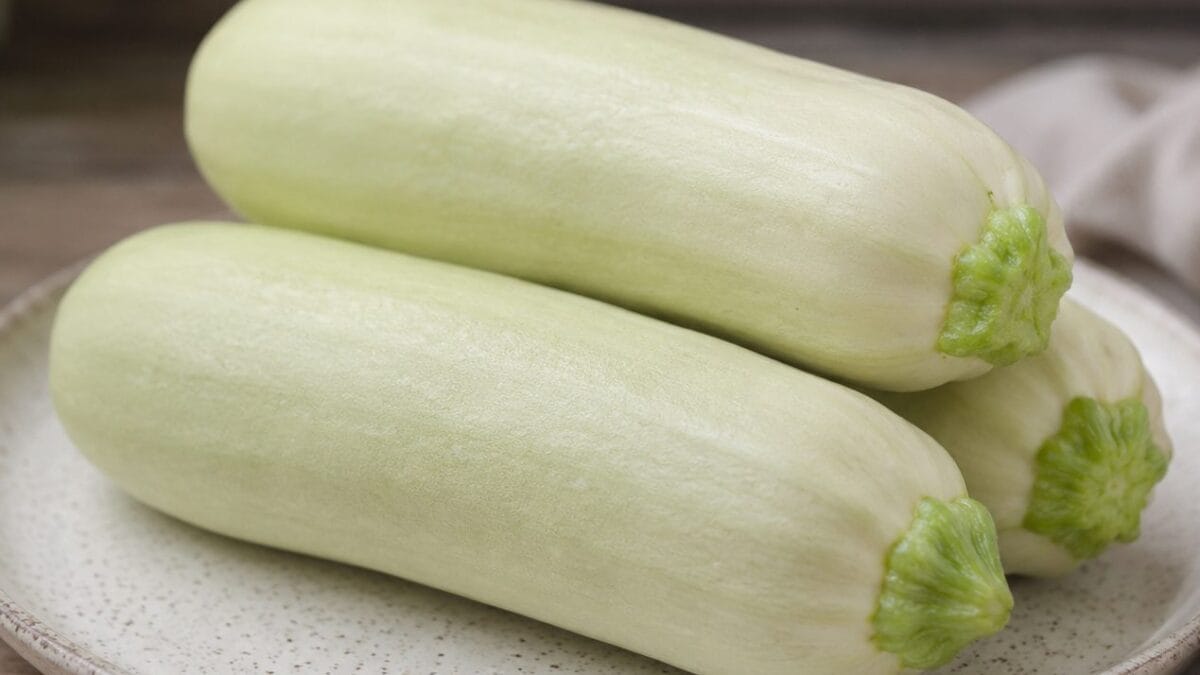
Among the many varieties of zucchini, white ones are among the most delicate but least common. Despite their name, they don't always have completely pure white skin: their color can range from ivory white to very pale green, sometimes with slight shading or marbling. What distinguishes them from the common dark green zucchini is primarily the fruit's pale appearance, generally accompanied by a thin skin, tender flesh, and a subtle flavor.
This isn't a single variety, but a group of cultivars and ecotypes of the Cucurbita pepo species that share a very light color. Among the best-known are the Caserta zucchini, with its uniform ivory skin, and the Bianca zucchini, a traditional variety with a whitish-green color. Because of their delicate flavor and soft texture, these zucchini are particularly suited to quick cooking, fillings, and dishes where they must complement other ingredients without overpowering their flavor. But how do you recognize white zucchini, what do they taste like, and what are the best ways to use them? Here's everything you need to know.
What Are White Zucchini (And Common Types)
The term "white zucchini" commonly refers to various varieties of zucchini characterized, at the time of harvest, by very pale skin. The color can be creamy white, ivory, or whitish green, while the surface can appear completely uniform or have barely visible marbling. The term "white zucchini" does not refer to a single botanical variety, but to a group of cultivars and ecotypes of the Cucurbita pepo species that share a particularly pale skin: they are therefore a subgroup of light-skinned zucchini. This latter category also includes sage green, gray-green, or mottled cultivars, while the term "white" is mainly reserved for varieties with the whitest hues. The boundary, however, is not always clear: some varieties traditionally called white actually have very pale green skin.
The best-known is probably the Caserta zucchini, an early and productive variety, especially widespread in California. It produces cylindrical fruits, short or medium in length, slightly thickening towards the end. When harvested, the skin is whitish green or ivory in color and may have slight marbling; if the fruit is left to ripen fully, it tends to take on yellowish hues. The flesh is light and firm, and the skin remains thin when the zucchini is harvested young.
Another traditional variety is the White Lebanese zucchini, particularly associated with the island's horticulture. The fruit is longer than the Caserta zucchini, cylindrical and slightly ribbed, with a skin that can vary from creamy white to very pale green. Some varieties reach considerable size, but are typically harvested before full ripeness, when the flesh is still tender. In cuisine, this zucchini is mainly used fried, baked, in parmigiana, and as a pasta sauce.
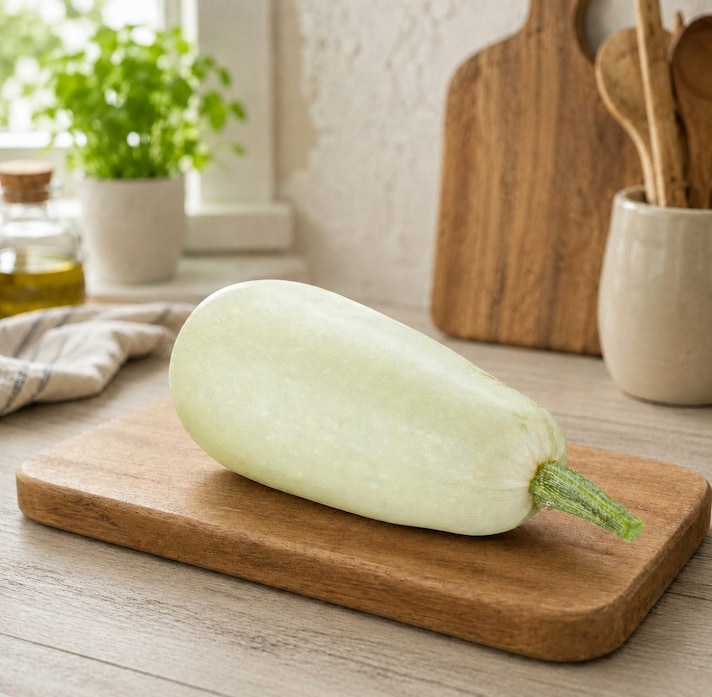
The Lungo Bianco, on the other hand, is recognized by its elongated, cylindrical fruits, sometimes slightly wider at the tip, with a fairly uniform ivory color. Here too, it's best to choose young, smaller specimens: as they grow, the zucchini develops more visible seeds and progressively spongier flesh.
Alongside traditional varieties, there are also numerous hybrids intended for professional cultivation. Seed catalogs also list cultivars such as Otto, Kinzica, and Manises as white zucchini, selected for their regular fruit, productivity, and resistance to certain diseases. Their skin, despite their commercial classification, generally appears very light and bright green rather than pure white.
However, they should not be confused with white zucchini cultivars such as the Eight Ball Zucchini, the Ronde de Nice squash, the Cocozelle zucchini, or the Costata Romanesco zucchini. These varieties may have pale, gray-green, or sage-green skin, but they more correctly fall into the general group of light-skinned zucchini.
What Do White Zucchini Taste Like?
White zucchini have a delicate, vegetal, and slightly sweet flavor, generally less pronounced than that of the dark green varieties. Their main characteristic is not so much an intense aroma, but rather their ability to absorb seasonings and flavors without overpowering the other ingredients.
The flesh of the young fruit is tender yet firm and suitable for both raw and cooked consumption. As with many light-colored zucchini, it can contain a significant amount of water: to prevent it from becoming too soft, it's best to cook it briefly and at fairly high temperatures.
How to Use White Zucchini in Cooking
White zucchini can be used in almost any recipe prepared with common green zucchini: their light flavor makes them particularly suitable for summer dishes, vegetarian preparations and recipes which include delicately flavored ingredients.
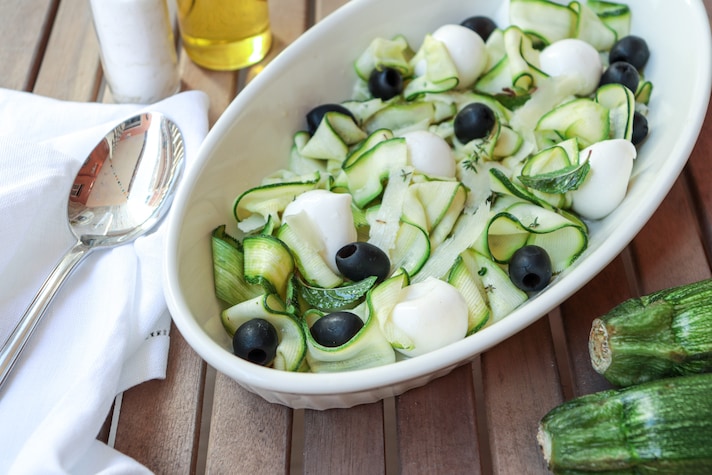
When small and very fresh, they can be eaten raw: thinly sliced with a mandolin, they're ideal for making a carpaccio dressed with extra virgin olive oil, lemon juice, pepper, mint, and parmesan shavings. They can also be added to salads along with cherry tomatoes, mozzarella, feta, olives, nuts, or legumes.
In a pan, simply cut them into rounds or cubes and cook them for a few minutes with oil, garlic, and aromatic herbs. To prevent them from releasing too much water, it's best to use a large pan, avoid overlapping the pieces excessively, and keep the heat high. They're also excellent grilled: the rapid cooking concentrates the flavor and creates a light browning on the surface. Once ready, they can be seasoned with oil, lemon, vinegar, parsley, or mint and served as a side dish, appetizer, or filling for sandwiches and focaccia.
The cylindrical shape of the more elongated varieties makes them ideal for stuffed zucchini: they can be cut in half, hollowed out, and stuffed with meat, rice, tuna, ricotta, couscous, legumes, or other vegetables. The extracted pulp can be minced and added directly to the filling.
White zucchini also find a place in pasta dishes, risottos, frittatas, savory pies, vegetable balls, and flans; grated, they can be used to make fritters, burgers, and savory dishes, but must be squeezed thoroughly to remove excess water. Thanks to their very light color, they are also particularly suitable for delicately flavored creamy soups.
The Best Pairings
The subtle flavor of white zucchini lends itself to numerous pairings: ricotta, robiola, stracchino, mozzarella, and feta work particularly well with fresh cheeses, while parmesan and pecorino can be used to add a more savory note. Among seafood, they pair well with shrimp, calamari, salmon, tuna, and white fish. They can be sautéed with shellfish to season pasta or used to make rolls and tarts.
For a more striking contrast, pair them with anchovies, capers, olives, sun-dried tomatoes, and cured meats; dried fruit, especially almonds, walnuts, and pine nuts, also adds a crunchy component that balances the softness of the pulp.
How to Choose Them at The Market
To buy good quality white zucchini, you need to pay particular attention to the consistency and appearance of the skin.
- The fruits must be firm, compact and heavy in relation to their size.
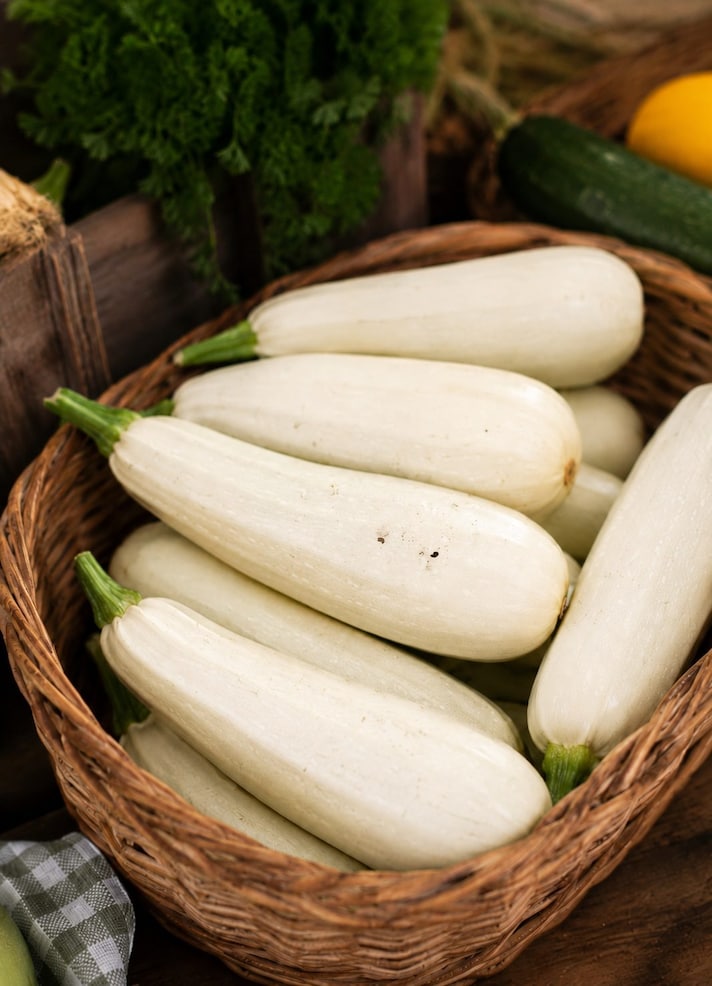
- The skin should appear tight, smooth, and free of bruises, cuts, or soft areas; the color can vary from ivory white to whitish green and does not necessarily have to be perfectly uniform.
- It is better to prefer small or medium-sized specimens: zucchini that are too large may have a more watery or spongy pulp, more developed seeds and a less tender skin.
- The stem also provides an indication of freshness: it should still be firm and not completely dry.
- If the zucchini is sold with the flower attached, the turgid and brightly coloured petals indicate a recent harvest, even if the flower naturally tends to wither much more quickly than the fruit.
- Finally, it's important to remember that pale color is a natural characteristic of the variety and not a sign of under-ripening. A fresh white zucchini should therefore be evaluated primarily based on its firmness, the shine of its skin, and the absence of damaged parts.
How to Best Store Them
White zucchini can be stored in the refrigerator's crisper drawer for about four or five days. It's best not to wash them before storing, as surface moisture can accelerate spoilage. They can be placed in a paper bag or a loosely closed container, avoiding pressing them under other vegetables. If they come with a flower, the latter should be carefully separated and used as soon as possible, preferably on the same day.
Before preparing them, simply wash them under running water and remove the two ends. The peel does not need to be removed: in addition to being thin and edible, it helps the fruit maintain a better consistency during cooking.
To preserve them longer, they can be cut, briefly blanched, and frozen, although they will be softer after thawing. For this reason, they're best used in soups, sauces, and cooked dishes, rather than as a crunchy side dish.
;Resize,width=767;)
