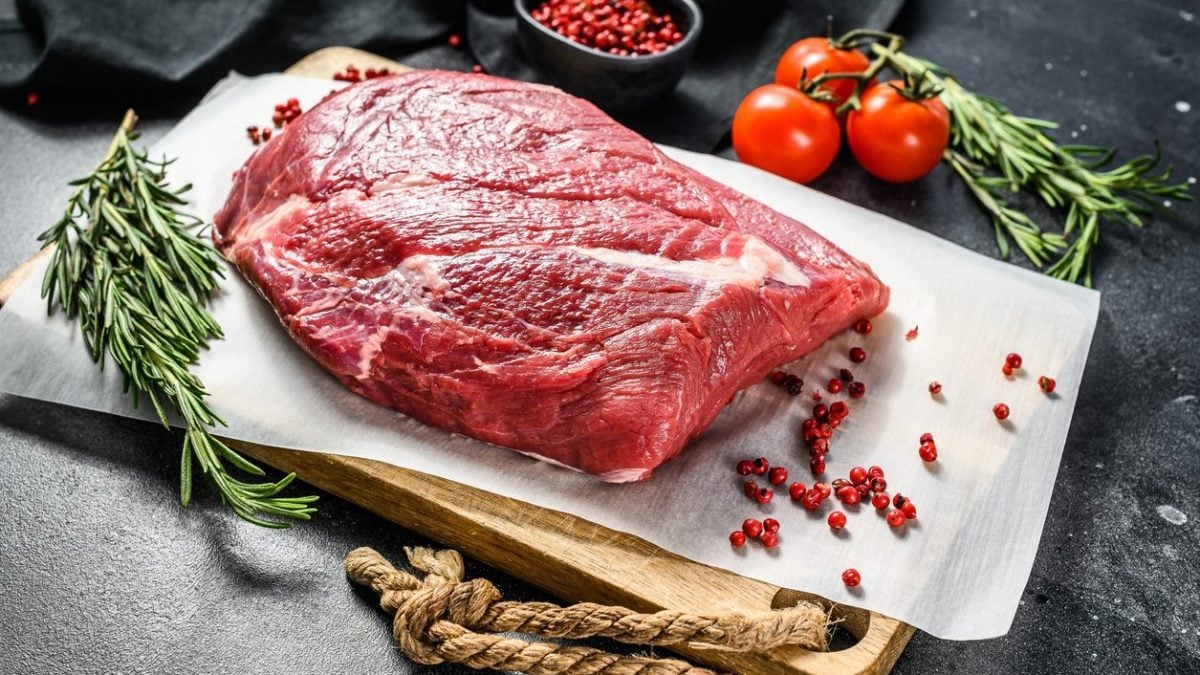
Among the most underrated cuts of slow cooking, beef brisket —the celebrated Anglo-Saxon brisket —has a charm all its own. It's not a quick cut: it requires a long time, moderate heat, and careful management of the collagen. But when treated correctly, it offers a combination of flavors and textures difficult to achieve with leaner or more valuable cuts of beef.
It's a structurally complex cut, clearly demonstrating its nature: robust fibers, a higher-than-average fat content, and a high presence of connective tissue. These very characteristics, which make it unsuitable for quick cooking, explain why it excels in slow preparations, where the collagen dissolves and the meat achieves a tender and juicy consistency.
Where Is It And Why Is It Special?
The brisket is located in the lower part of the chest, below the rump and next to the rib. It's an area that supports much of the animal's weight, and this translates into a pronounced structure: strong fibers, plenty of collagen, and a prominent fat cap.
At the butcher's, it's instantly recognizable: red, firm, with a balance of lean and fat that hints at its natural vocation for slow cooking. It doesn't have the aristocratic tenderness of the rear cuts; instead, it has a rustic simplicity that only mellows with slow heat.
Nutritionally, it's a richer cut than the "noble" ones, with a fat content that can reach 16%. But it's precisely this richness—external fat, internal veins, collagen—that gives it that melting, juicy texture that's impossible to replicate with a lean cut.
Aromatically, brisket is a world apart: natural sweetness, toasted notes from searing, and great harmony with spices and marinades. It loves Mediterranean herbs, but is also not afraid of paprika, cumin, black pepper, and light smoke.
In English, beef brisket translates as the richest and most marbled portion of the breast. It is the "point cut", the part that in the United States is enhanced during the long barbecue cooking.
How to Use Brisket in Cooking
The rule that always applies is: low heat and long cooking time. This is not a meat for quick cooking, nor for improvisation. But when you let it cook through its tenderizing process, the result is extraordinary. Here's how to use this cut to its full potential.
1. Braised
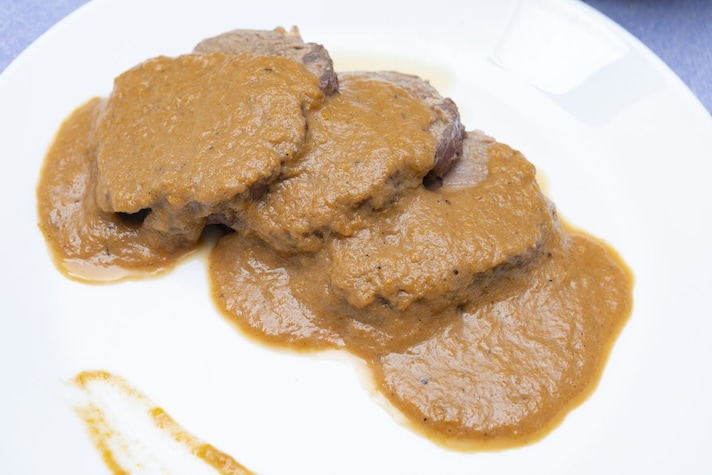
Braising is perhaps the best technique for enhancing the natural texture of the cut. First, the slow browning creates the crust; then, the immersion in a liquid —red wine, dark beer, or broth—softens the fibers and dissolves the collagen. The result is a firm yet yielding meat, juicy and deep.
2. Stewed
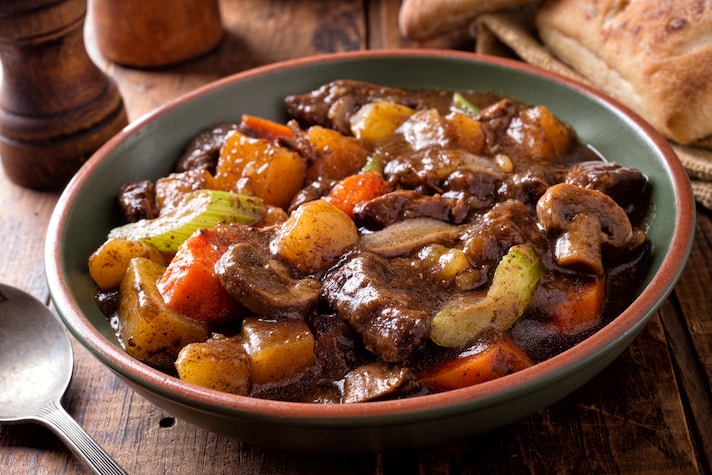
In a stew, brisket becomes more familiar. The smaller pieces soften completely, and the meat becomes an integral part of the cooking juices, enriching the dish with a velvety, lingering texture. Ideal for aromatic, spicy, and intense dishes.
3. Boiled
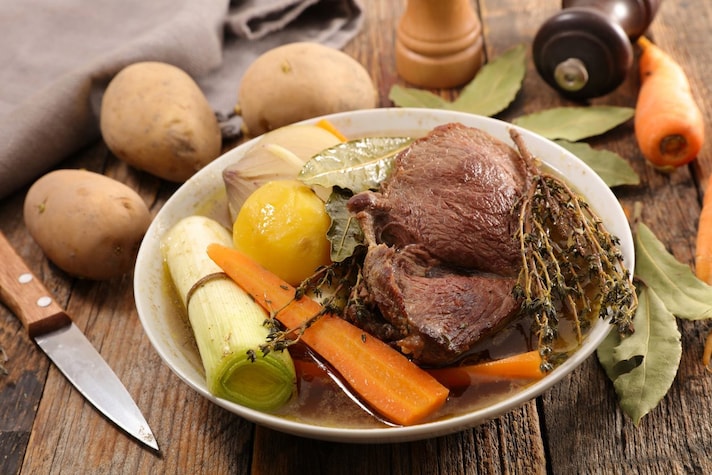
When boiled for a long time, the brisket releases flavor into the broth while also absorbing it: it doesn't dry out or become stringy, remaining soft and juicy even after hours. A safe choice for those seeking a full-bodied, harmonious boiled meat.
4. Barbecued
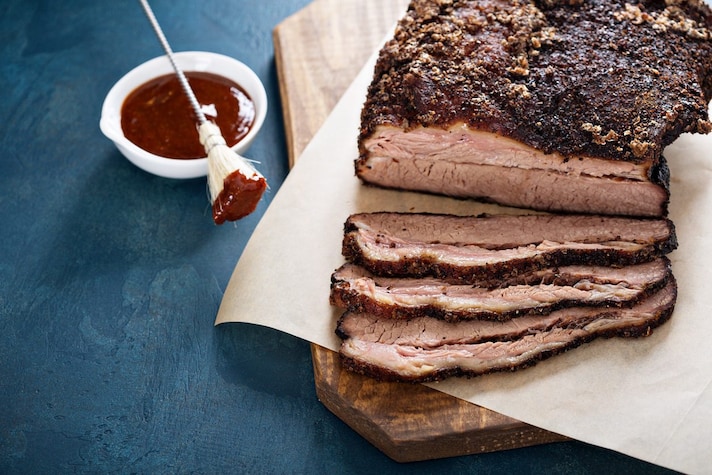
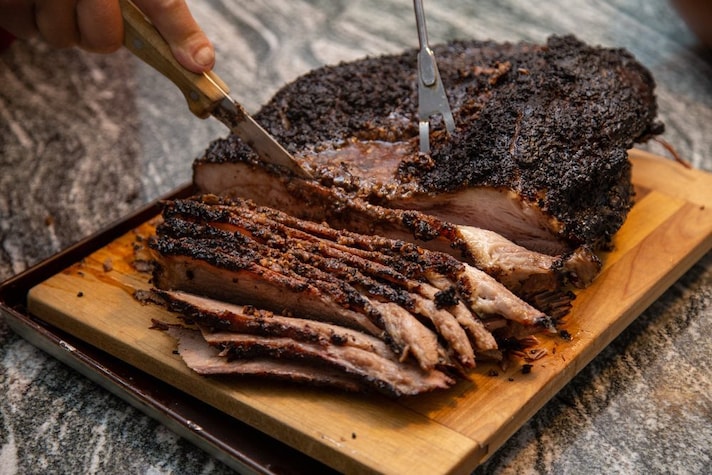
The American version, brisket, is more of a ritual than a recipe: hours and hours of cooking at a controlled temperature, light smoking, and that metamorphosis where the outside becomes dark and aromatic while the inside transforms into a buttery, gelatinous substance. The famous jiggle, the soft vibration when you lift the piece, is the hallmark of a successful brisket.
5. Pulled
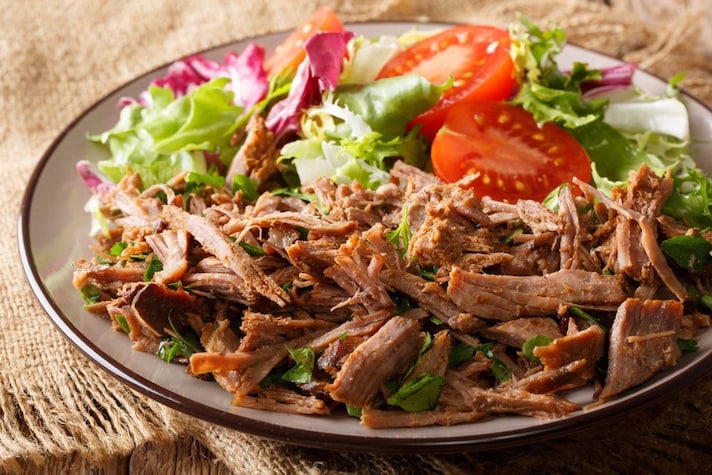
Cooked beyond tenderness, the brisket becomes perfect for pulling: pulled beef is rich, flavorful, and holds seasonings and spices like few other cuts. Ideal for sandwiches, tacos, bao, and spicy dishes. One fundamental rule: don't trim off all the fat, as it's its natural protection and the guarantee of its tenderness.
The Differences With Similar Cuts
The brisket shares the forepart with other cuts that, at first glance, might seem interchangeable, but actually have very different personalities. The brisket, for example, is more balanced: it has fine, diffused internal marbling that makes it naturally tender without requiring interminable cooking. It offers immediate juiciness and a rounded flavor, but it doesn't achieve the "melty" transformation typical of cuts richer in collagen.
The rib, on the other hand, is the most gelatinous of the group: rich in connective tissue and crisscrossed by bone, it offers an almost creamy softness and an intense aromatic depth, ideal for stews and very long slow cooking. However, it is less uniform and more rustic in its yield.
The priest's hat is placed elsewhere: finer fiber, a more elegant aromatic profile, a tenderness achieved with consistency but without excess fattiness. It comes from the beef shoulder, more precisely from the muscles inside the shoulder blade. Perfect for simple braising, less so for elaborate preparations or smoking. Finally, the shoulder cover is the most "virile": muscular, flavorful, robust, it requires time and liquid to express itself, but delivers a bold, less velvety flavor.
Compared, these cuts reveal a whole vocabulary of textures and identities within the beef forequarters: some more balanced, others more gelatinous, still others finer or more rustic. Each has its own specific purpose, and the subtle differences between them explain why the choice of cut, when cooked slowly, truly changes the outcome on the plate.
How to Choose Brisket At the Butcher's
Choosing the brisket isn't an automatic process: it's an important step, almost as important as the cooking itself. While it's true that it's a relatively inexpensive cut, that doesn't mean choosing it doesn't require careful consideration and a precise plan.
- Color. It should be a bright red, with a natural tone. Be wary of colors that are too dark or unnaturally bright.
- Fat. Fat is the key to cutting. It should have an even cap and minimal internal marbling: this is what ensures juiciness and aroma. A piece that's too "clean" risks being dry.
- Texture. The meat should be firm and slightly springy to the touch, never soft or moist. The presence of collagen should not result in a spongy texture.
- Smell: Clean, fresh. No acidic notes.
- Origin and aging. Meat from certified Italian or European cattle is ideal, aged for at least 10-14 days to avoid excessive toughness.
Where does it come from? A good butcher will also be able to tell you this, and it's valuable information:
- Part closest to the breast (flat): leaner, more even. Excellent for boiled meats and "tidy" braising.
- The point area is richer in fat and more irregular. Perfect for brisket, for those seeking a more "melting" result.
Brisket, more than other cuts, should be chosen with the recipe in mind. It's not something to be improvised: it's an ingredient for thoughtful cooking, which rewards those who treat it with care.
Choose Brisket If You Want to Prepare…
- rich and juicy braised meats
- a full, soft boiled meat
- try your hand at American brisket
- get pulled beef for sandwiches and tortillas
- cook at low temperature for many hours
- enhance spices, marinades, smoking
Don't Choose Brisket If You Want to Prepare…
- quick cooking in a pan or grill
- lean and light meat
- carpaccio, tartare, rosé cooking
- delicate or low-fat flavors
- compact and non-stringy consistencies
;Resize,width=767;)
