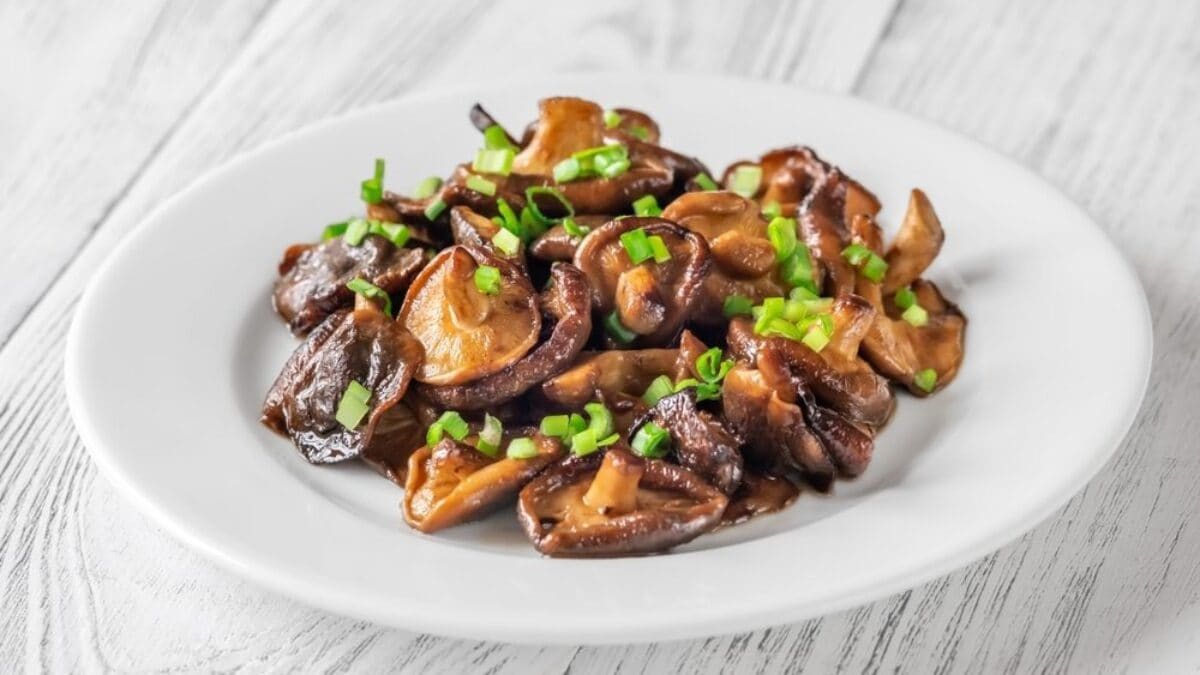
Many varieties of mushrooms grow in European and American forests, but there is a highly sought-after species that is not native to our forests: shiitake mushrooms, among the most beloved protagonists of Asian cuisine and particularly appreciated by contemporary cuisine. Shiitake mushrooms have been growing for thousands of years in the chestnut and oak forests of East Asia, loved since ancient times for their intense flavor, meaty texture, and extraordinary ability to enrich a dish with depth and character. This is not the only reason why they are so widespread, so much so that they are the second most consumed edible mushroom in the world after the button mushroom: these mushrooms have always been a fundamental element of traditional Chinese medicine, so much so that they were called the "elixir of long life" during the Ming Dynasty.
This doesn't mean they're a miracle ingredient, but science certainly recognizes their many beneficial properties for our bodies, so much so that more in-depth research is beginning to be conducted into their potential benefits. Today, shiitake mushrooms are considered a haute cuisine ingredient in their own right, prized by chefs around the world for their unique flavor profile and versatility, but they're also beginning to spread in the West as an ingredient for everyday use. Let's discover all the characteristics of shiitake mushrooms, the properties scientifically studied, and, above all, how to use them in the kitchen to best enhance their potential.
Shiitake Mushrooms' Origins and Characteristics
Shiitake, whose scientific name is Lentinula edodes, is a mushroom belonging to the Omphalotaceae family. Native to East Asia, it originally grew wild on the trunks of broadleaf trees such as chestnut, oak, and beech, but today it is almost exclusively a cultivated mushroom; currently, the largest crops are found in China (the world's leading producer), Japan, and South Korea, but they are also growing in Europe and the U.S.. Shiitake is a saprophytic mushroom, meaning it feeds on dead or decaying organic matter (such as old wood, fallen leaves, branches, or excrement), converting it into simple inorganic substances.
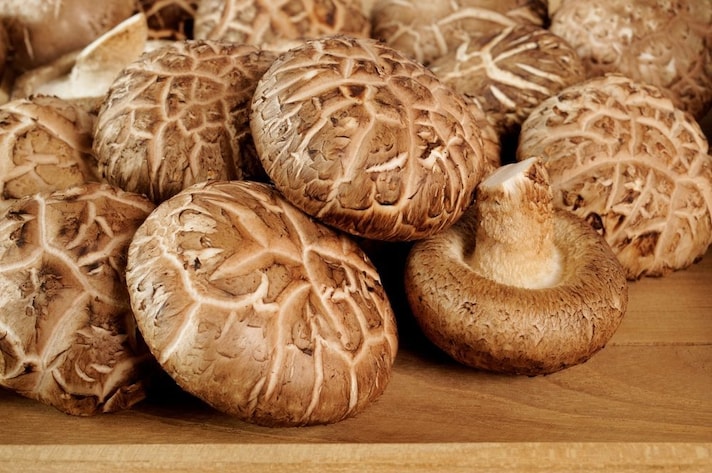
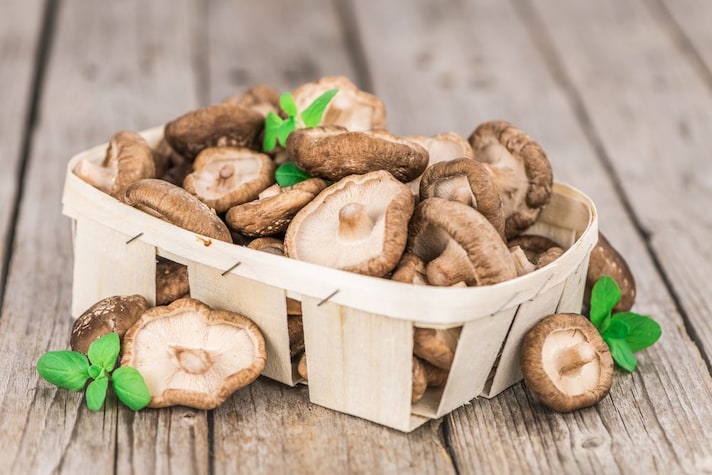
It has a highly recognizable appearance: the cap, generally rounded in young specimens, ranges in color from light to dark brown, sometimes with small cracks or lighter areas on the surface. The lower part has light gills, while the stem is robust and more fibrous than the cap. It is the cap that is most appreciated in cooking, because it offers a firm and pleasant consistency, capable of maintaining its structure during cooking without completely losing its structure. Unlike local mushrooms, in fact, which predominate with more delicate and traditional woodsy, hazelnut, or undergrowth aromas, the shiitake has an intense and earthy flavor, with a slight garlicky note and a strong presence of umami, the so-called "fifth flavor."
Shiitake has been cultivated in China for centuries, where it was used not only as a food but, above all, as an ingredient in traditional Chinese medicine. It was considered a tonic capable of "invigorating vital energy," recommended for bronchitis, colds, fatigue, and to support vitality at all ages. During the Ming Dynasty, it was called the "elixir of long life" for its supposed effects on the immune system. In Japan, however, the mushroom has become more of a food, essential in traditional recipes.
Regarding its name, the Japanese word shiitake is composed of shii, the name of a tree belonging to the Fagaceae family, and take, meaning mushroom. The term thus recalls the connection between this species and the trees on which it grows. In China, however, it is known as xiānggū, literally "fragrant mushroom," while in Korea it is known as pyogo. There is no official American name for shiitake: it is referred to as the Japanese mushroom, oak mushroom, or simply by its scientific name. Its international diffusion has grown with the popularity of Asian gastronomy and the development of more modern cultivation methods, which allow it to be produced even in continents other than Asia using substrates prepared from sawdust and plant materials.
Shiitake Mushrooms' Properties and Benefits
Shiitake owes its reputation as a "miracle mushroom" to a combination of a long tradition in Asian medicine and the presence of unique molecules studied by modern science. Of course, as with all things, one shouldn't overdo it: while laboratory and clinical studies have confirmed the value of molecules like lentinan and eritadenine, science still recommends consuming the product with caution, both as a dietary supplement and as a supplement. While it's certainly true that consuming shiitake in a balanced way offers excellent nutritional benefits, it's not a "magic food" whose consumption prevents or cures specific diseases.
With this necessary introduction, what makes shiitake so valuable? Its nutritional profile clearly highlights it: in addition to the typical characteristics of many edible mushrooms—low calories, low fat, high water, fiber, and protein—it also contains a series of micronutrients and substances that make it particularly interesting. Shiitake is a low-calorie mushroom, naturally gluten-free, and composed of complete proteins containing all nine essential amino acids, B vitamins (B1, B2, B3), and, in varying amounts, vitamin B12. It provides minerals such as potassium, iron, zinc, selenium, and copper, and is one of the few dietary sources of ergosterol, a precursor to vitamin D2. Above all, it contains lentinan, a beta-glucan studied for its possible effects on the immune system, and eritadenine, a substance being researched for its potential role in cholesterol metabolism.
Given this wealth of nutrients, how can shiitake mushrooms help? Scientific studies have shown that:
- They may be useful in supporting the immune system function, thanks to the presence of beta-glucans and other polysaccharides that can influence the activity of immune cells. In a 2015 clinical study, 52 healthy adults consumed 5 or 10 g of dried shiitake mushrooms daily for four weeks. Researchers observed changes in the proliferation and activation of certain immune cells and in salivary immunoglobulin A (but this doesn't mean they can prevent colds, just strengthen the immune system).
- They provide a good supply of fibres useful for intestinal health, including polysaccharide substances, which contribute to normal intestinal function.
- They contain phenolic compounds and other bioactive substances that show antioxidant activity in laboratory experiments, highlighting a potential aid in reducing oxidative stress or disease risk in people.
- They may contribute to cardiovascular health thanks to the effect of beta-glucans on fat metabolism. However, this is still a very preliminary study, and the clinical results, while encouraging, are still inconclusive.
Fresh Vs. Dried Shiitake Mushrooms
Shiitakes must be eaten thoroughly cooked, as eating them raw or undercooked is associated with the risk of a particular skin reaction called shiitake flagellate dermatitis. Proper cooking significantly reduces the risk, but does not completely eliminate it. Shiitakes can be purchased fresh or dried: the choice depends primarily on the recipe you're making and the desired flavor.
Fresh shiitakes are readily available in American supermarkets, in specialty shops, organic stores, and Asian markets. During cooking, they release some of the moisture contained in their tissues, softening them and developing a concentrated flavor. This makes them particularly suitable for quick preparations, such as stir-fried mushrooms, side dishes, risottos, omelettes, and pasta dishes. To prepare them before cooking, simply proceed as you would with any other mushroom: remove any soil residue with a slightly damp cloth or a soft brush, avoiding immersing them in water, as they tend to absorb moisture. Once cleaned, separate the cap from the stem: the cap is the tastiest, softest, and most fleshy part to cook; the stem is usually not eaten in pieces in dishes because it is very tough, woody, and fibrous. This doesn't mean you have to throw it away, because it is edible and you can use it to prepare broths, stocks or sauces, where it releases all its umami flavour without ruining the consistency of the dish.
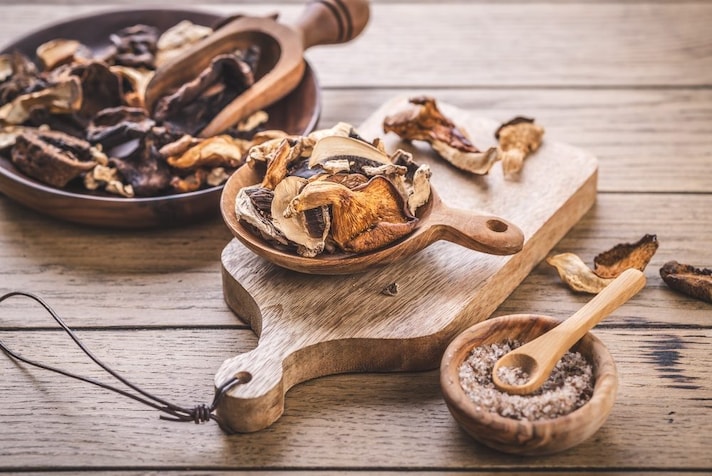
Dried shiitakes, on the other hand, have a more intense and concentrated aroma, with deep nuances and an even more pronounced umami flavor than fresh mushrooms. Removing water during drying changes the mushroom's structure and promotes the development of a different flavor profile than that of fresh mushrooms, which is more intense and concentrated. For this reason, they are widely used in broths, soups, sauces, and stews. Before cooking, they must be rehydrated to regain a soft consistency and become easier to cut and use: they should be soaked in warm water for about 30 minutes, or in cold water for a couple of hours, which helps maintain the intensity of the aroma. They are ready when they are soft and uniformly pliable to the touch. Remember not to throw away the mushroom soaking water, as it is a very valuable ingredient, a true concentrate of flavors that can be used as a base for broths, risottos, and sauces.
Shiitake mushroom powder is also available on the market, a versatile ingredient that can be easily used in the kitchen as a condiment and flavor enhancer, to give greater depth and intensity to the flavor of soups, risottos, sauces and marinades, but it is also suitable for being mixed with minced meat or added to bread dough, crackers and savory muffins.
How Shiitake Mushrooms Are Used in Asian and Western Recipes
The most distinctive characteristic of shiitakes is their deep, savory, and enveloping flavor, often described as earthy, woody, and almost meaty. Thanks to this distinctive flavor, which pairs perfectly with the tastes of Asian cuisine, shiitakes have become crucial to Far Eastern cuisine. Their use varies according to local culinary traditions, but in China, Japan, and Korea, they have been a prized ingredient for centuries in dishes rich in aroma and aromatic depth. In Japan, shiitakes are particularly prized in broths, soups, and rice-based dishes, both fresh and especially dried, because the drying process concentrates the aromas and allows for a more intense flavor. They are used to make aromatic broths, are often featured in miso soups, ramen, and noodle soup, and are featured in traditional dishes such as takikomi gohan, a rice dish cooked with vegetables and other ingredients, and nimono, slow-cooked stews in which mushrooms are flavored with soy sauce, mirin, and broth.
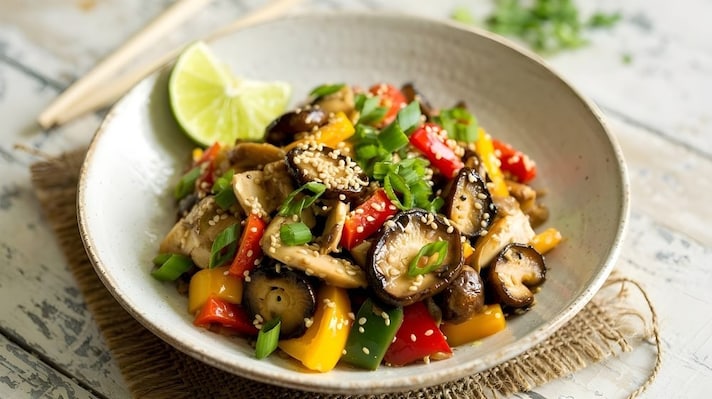
In China, their use is equally widespread and encompasses numerous preparations. Shiitakes are often cooked with soy sauce, garlic, ginger, and spring onions, ingredients that enhance their earthy notes and natural flavor. A particularly popular preparation is braised mushrooms, in which the shiitakes slowly absorb the seasonings and become soft and rich in flavor. They are also used with vegetables, tofu, and other plant-based ingredients, as well as a filling for ravioli and other traditional pastas. In Korean cuisine, however, shiitakes are used primarily in vegetable-based dishes, noodles, soups, and fillings. A significant example is japchae, a traditional preparation based on transparent noodles, sautéed vegetables, and, depending on the recipe, meat. In this dish, the mushrooms are cut into strips and cooked together with carrots, spinach, and onions, then seasoned with soy sauce and sesame oil. Shiitakes also often appear in mandu, Korean dumplings, or as a side dish or in stews.
Versatility is one of the main strengths of shiitakes: their flavor pairs well with delicate ingredients as well as with foods with a bold character, and this makes them easily used even in recipes more typical of Western culinary culture. The best ways to use shiitakes are:
- Pan-fried. Sautéed with extra virgin olive oil, garlic, or shallots, they develop toasted notes and a pleasantly meaty texture. To achieve a good browning, remember not to overcrowd the pan and to let the water released during cooking evaporate.
- In risotto and pasta dishes. Just like local mushrooms, shiitakes also pair perfectly with risotto and pasta: you should use them exactly as you would porcini mushrooms, measuring the quantities carefully because they have a much more savory and intense flavor.
- In soups and broths. Just like in Asian tradition, you can use shiitakes to flavor soups and broths: during cooking, the mushrooms release aromatic substances that contribute to the complexity of the broth, making it very flavorful and tasty.
- With vegetables, meat, and fish. Shiitake mushrooms pair well with cabbage, spinach, spring onions, tofu, and rice, but also with chicken, beef, and fish. Combining them with flavorful ingredients can enhance the umami sensation, making the dish more harmonious.

