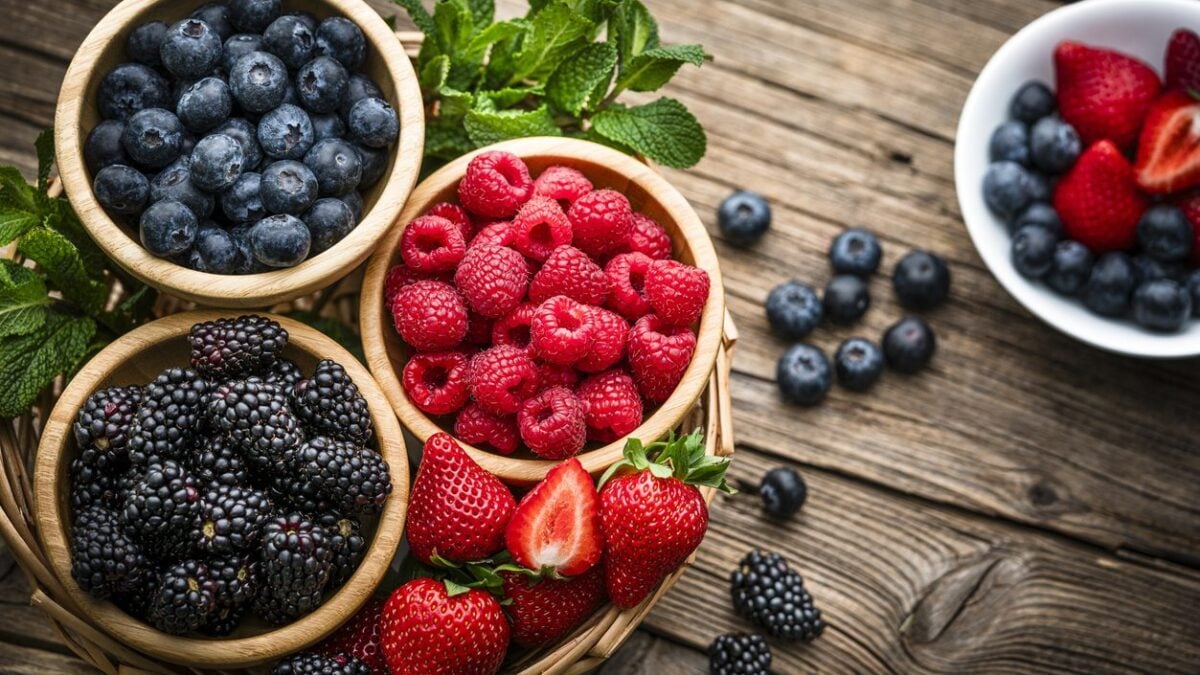
Nature has given us an extraordinary gift: fruit, a "natural dessert" with exceptional beneficial properties. Besides being pleasantly sweet, fragrant, and refreshing, fresh fruit plays a fundamental role in protecting the body: a treasure trove of water-soluble vitamins, antioxidants, minerals, and fiber, it has an important anti-inflammatory effect, improves hypertension, lowers bad cholesterol, and helps prevent the onset of numerous diseases. Rich in water, especially summer water, it keeps us hydrated, satiates us, and promotes intestinal transit.
Some fruits, more than others, appear to have a high concentration of bioactive compounds, substances capable of modulating and reducing chronic low-grade inflammation. What are these fruits, and how can we include them in our diet? Harvard Medical School has shed light on this issue by publishing the complete list on its website. We spoke with our trusted expert, Dr. Simone Gabrielli , who, on this very issue, is keen to provide some scientific clarifications.
Low-Grade Systemic Inflammation
Before discussing anti-inflammatory fruits, it's important to take a step back and understand low-grade systemic inflammation. It's a mild but persistent inflammatory state that, if left untreated, can increase the risk of developing various chronic diseases over the long term, such as cardiovascular disease, insulin resistance, type 2 diabetes, and some forms of cancer.
Systemic inflammation isn't caused by a single food, but by an overall unbalanced diet and lifestyle. Conversely, a plant-based diet helps maintain balance in the body, modulating and reducing this inflammatory state. "This is where the commercial label ‘anti-inflammatory foods' comes from," Gabrielli explains. "However, we shouldn't think of them as firefighters ready to put out a blaze: if the overall diet remains unbalanced, if you consume excessive calories, or if you're sedentary, consuming foods considered protective won't solve the problem."
What Are Anti-Inflammatory Fruits?
All fresh fruits and vegetables are therefore excellent allies. We often read rankings based on the concentration of specific antioxidants, or molecules capable of counteracting free radicals, responsible for oxidative stress and cellular damage. "It's important to know, however, that the clinical efficacy of these isolated antioxidants is documented primarily by in vitro studies, i.e., laboratory studies on cells, while scientific evidence in humans demonstrates that the real benefits come from eating whole fruit," explains our expert. It's not the single molecule that makes the difference, but the combination of all the substances working together in the food.
With this necessary premise in mind, it's possible to draw up a list of those fruits that, thanks to their high concentration of bioactive compounds, are considered "anti-inflammatories." These substances, in fact, have proven particularly effective in modulating and reducing chronic low-grade inflammation.
Among the fruits richest in protective compounds, such as anthocyanins, flavonoids, carotenoids and resveratrol, we find:
- berries, including blueberries, raspberries, and blackberries; these contain anthocyanins, the molecules responsible for their characteristic color, studied for their potential ability to protect blood vessels;
- black grapes: contains resveratrol, a compound concentrated mainly in the skin and studied for its potential benefits on the cardiovascular system and cellular longevity;
- apples: in addition to being rich in fiber and vitamin C, they contain quercetin, a molecule concentrated in the peel and studied for its potential action on the immune and cellular response;
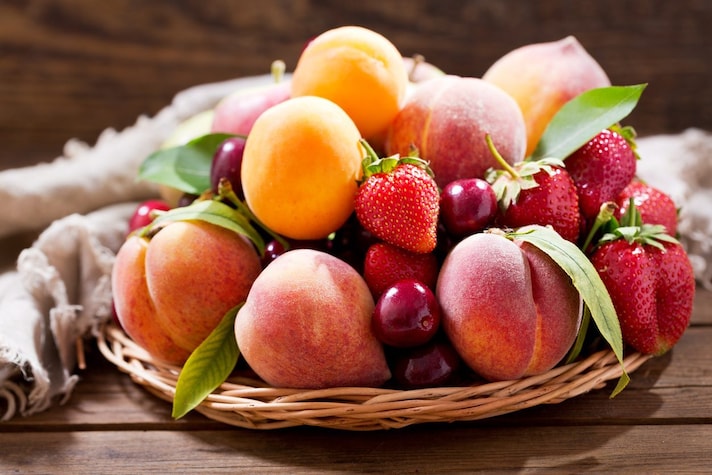
- cherries: they contain anthocyanins and fisetin, molecules that scientific research is studying for their potential action in counteracting cell aging;
- apricots: they contain carotenoids, the pigments that give the orange colour and which the body transforms into vitamin A, useful for the immune system;
- pomegranate: a mine of vitamins C and K and potassium, it contains ellagic acid, a substance studied for its potential protective effects on the arteries and circulation;
- Citrus fruits (oranges, lemons, grapefruits): famously rich in vitamin C, they are among the most valuable allies of the winter season; they contain hesperidin and hesperetin, molecules concentrated mainly in the white part under the peel – which therefore should not be removed – studied for their potential action in reducing inflammation of blood vessels and protecting the circulatory system;
- Peaches: they contain fisetin and quercetin, molecules studied by scientific research for their potential ability to counteract cellular senescence and modulate the body's inflammatory responses.
"However, drawing up rankings of merit makes little sense: the most effective strategy remains to vary the colors on the table as much as possible to ensure a full spectrum of beneficial substances," Gabrielli is keen to point out.
Quantities, Frequencies and Combinations
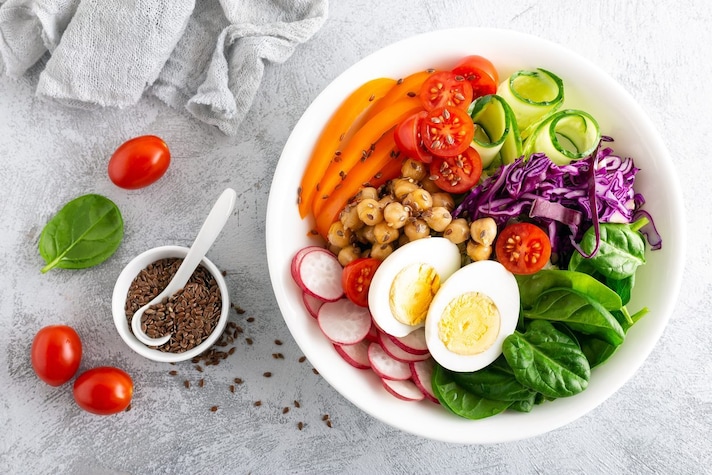
The best way to structure a protective and anti-inflammatory diet is to follow the rule of five servings a day of fruit and vegetables (three of the former and two of the latter). "Vegetables should be present as a side dish for both lunch and dinner. In addition to antioxidants, they provide water, vitamins, minerals, and above all fiber, which are essential for the nourishment and health of our intestines," explains the expert.
In the absence of specific therapeutic conditions, fruit can be consumed at any time of day: eaten as a mid-morning or mid-afternoon snack, it's an excellent hunger breaker, helping to avoid high-calorie, processed snacks high in saturated fats and free sugars. "It's useful at the end of a meal because the vitamin C it contains promotes the absorption of plant-based iron," Gabrielli suggests.
It's best to consume it whole, with the peel intact if it's from a safe source (we've seen that this is where the precious bioactive compounds are concentrated), and not in the form of smoothies, juices, or shakes: eating fruit is different from drinking it, and fruit juice has a higher glycemic index than eating the same fruit whole and in bite-sized pieces. To allow for a more gradual release of insulin and maintain more stable blood sugar levels, it's best to pair it with a source of fat and/or protein (such as a handful of dried fruit, a square of dark chocolate, or plain yogurt).
We always choose seasonal products, richer in beneficial substances and micronutrients: when fruit and vegetables grow outside of their correct seasonality, they are subjected to greater fertilization treatments.
We buy local, untreated, and organic fruits and vegetables as much as possible: not only are they safer, they're also fresher than those from distant areas, which are picked long before they naturally ripen. We try to combine fruits and vegetables of different colors, as each is associated with a specific antioxidant.
Legumes' Roles
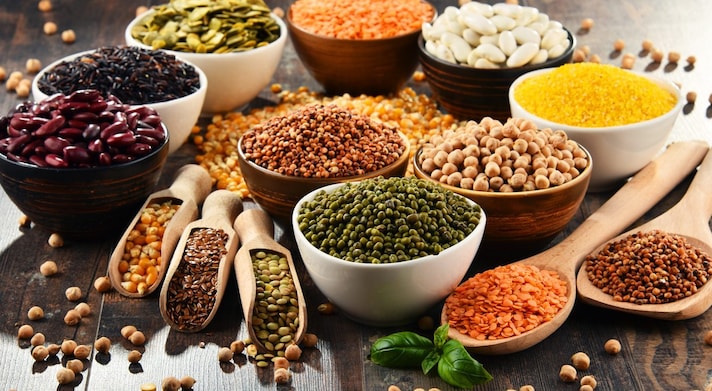
Legumes, such as chickpeas, lentils, beans, and peas, shouldn't be considered a simple side dish, but rather a true plant-based protein source, an alternative to meat, fish, and eggs. Rich in both soluble and insoluble fiber, they're a treasure trove of iron, potassium, magnesium, and B vitamins. It's recommended to include them 3 to 5 times a week, and if you're not used to eating them, it's best to introduce them gradually and in small quantities, initially favoring the hulled or floured varieties to allow the intestines to adjust and avoid uncomfortable bloating. You can also puree them using a food mill, but avoid blending them with an immersion blender, which could incorporate too much air.
Other Strategies to Reduce Inflammation
Among the pillars of an anti-inflammatory diet is controlling the glycemic load of meals, which doesn't mean avoiding carbohydrates or eliminating sugars, but ensuring they are included in a healthy context and not in excess of your needs. It's best to choose whole grains, avoiding refined grains as much as possible, and to create well-balanced meals composed of a source of complex carbohydrates, a source of protein, and a source of healthy fats (without forgetting the fibrous component, derived from vegetables and fruit).
A second aspect to consider is controlling the ratio of omega-3 to omega-6, which is crucial for effectively modulating inflammation. The Western diet, in fact, is heavily biased toward omega-6, which is present not only in nuts —which in itself is absolutely beneficial if consumed correctly and frequently—but especially in industrial fats (margarine and refined vegetable oils) and the fatty parts of intensively farmed animals or fish.
To rebalance the relationship between the two, it's essential to limit ultra-processed foods, rich in sugars and hydrogenated fats, as much as possible, and increase consumption of fresh, high-quality foods (sea-caught fish, preferably blue, local, and small; white meat from extensive and non-intensive farms; organic eggs, etc.). For the same reasons, we should reduce our intake of red meat and, especially, processed meats and sausages, such as sausages and cured meats.
;Resize,width=767;)
