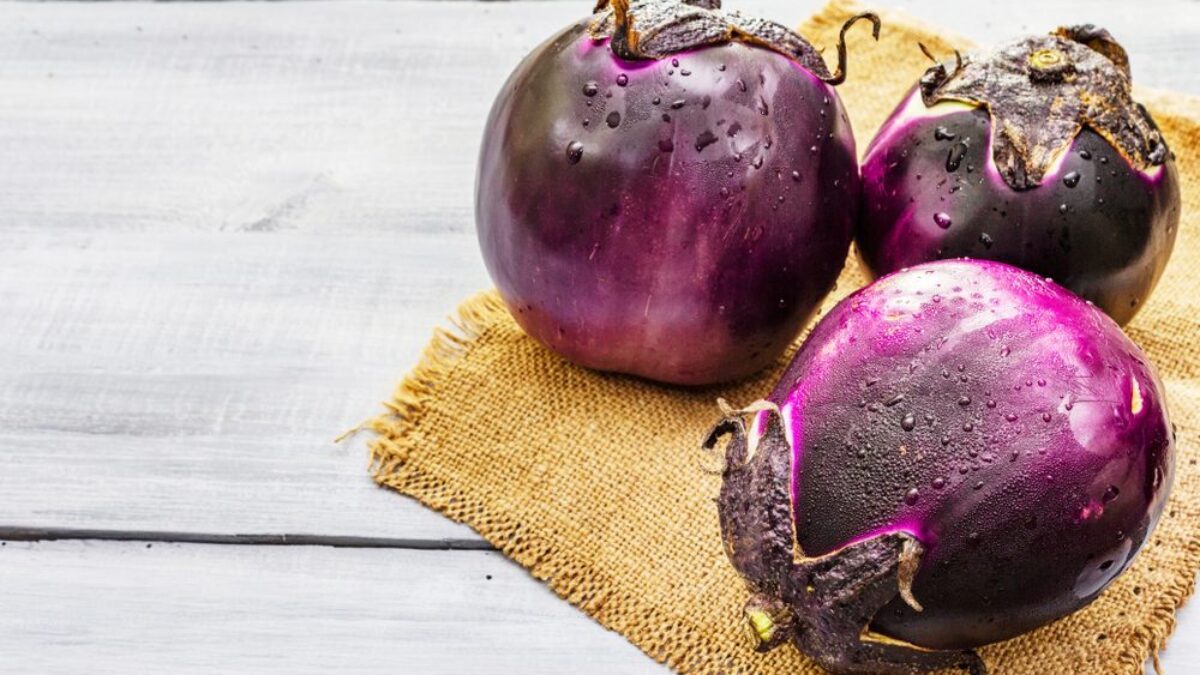
Among the various types of eggplant, round eggplants are recognized by their plump shape and generally abundant flesh. They are very versatile, but not all are used in the same way: size, consistency, and degree of ripeness can make them better suited for slicing, baking, or stuffing. Round eggplants include very different varieties: some produce large, slightly flattened fruits, from which large, even slices are obtained; others remain small and compact and are harvested specifically to be hollowed out, stuffed, or preserved in oil.
The color can also vary: alongside the common dark purple eggplants, there are lilac, violet, white, or striped varieties. The flesh is generally abundant, but the consistency, number of seeds, and any bitter notes depend on the cultivar, the degree of ripeness, and the growing conditions.
Their rounded shape makes them particularly convenient for preparing cutlets, pizzas, timbales, and discs to fry or bake. Smaller varieties, however, can be halved and transformed into stuffed dishes. But how do you recognize round eggplants, what are the main types, and how to choose the best recipe? Here's everything you need to know.
How to Recognize Round Eggplants
Round eggplants belong to the Solanum melongena species, like other eggplants, and are distinguished by their large, full, and rounded fruit. Their shape is not always perfectly spherical: some varieties are slightly flattened at the ends, others have more or less visible ribs, while some varieties can be almost oval without being truly elongated. Size varies considerably: large round eggplants can weigh over half a kilo, while varieties intended for stuffing are often harvested when they are still small, tender, and with underdeveloped seeds.
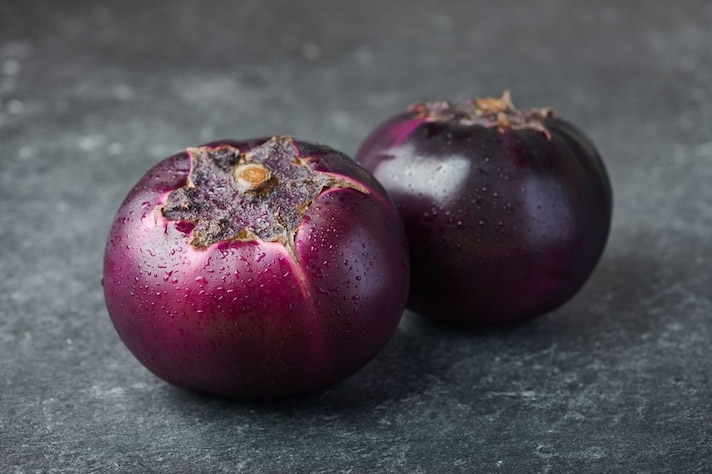
The skin is generally smooth, tight, and shiny, while the most common color is purple, ranging from lilac to very dark purple, although white, pink, or striped fruits also exist. The calyx may have small thorns depending on the variety, so it's important to handle it carefully when washing and cleaning. Inside, the flesh is light and spongy: in fresh specimens, it appears firm and contains small, tender seeds; in eggplants harvested too late, the seeds become more numerous, dark, and firm, while the flesh may be more stringy or bitter.
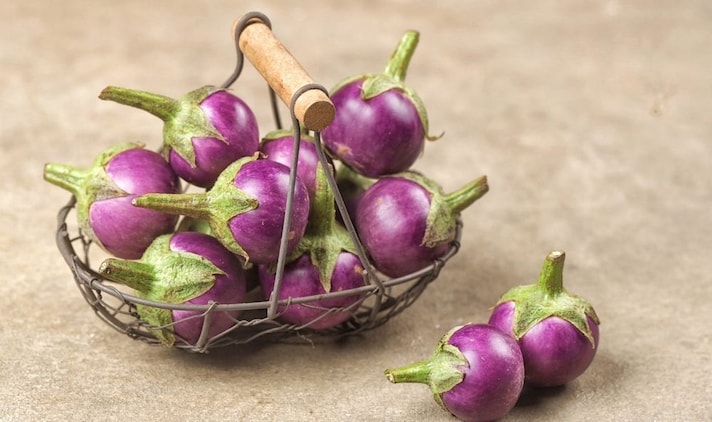
The term "round eggplant" does not refer to a single cultivar, but rather a group of varieties sharing a large, rounded shape. Among the best-known is the Rosa Bianca: an American variety characterized by large, light purple or lilac fruits, often slightly flattened at the ends, with pale, firm, and generally delicate flesh. The Casper eggplant, on the other hand, produces round, purple eggplants of medium to large size. Numerous varieties and hybrids belonging to the violet round group are also available on the market, selected to produce regular fruits, a limited number of seeds, and flesh that tends to blacken shortly after cutting.
Also very popular are the round, black eggplants, with their dark, shiny skin. They generally have firm flesh and can be sliced into discs, fried, grilled, breaded, or baked. The striped round eggplants have a purple or pinkish surface with lighter streaks. Their flavor is often delicate, and the flesh can be tender and sparsely seeded, especially when harvested at the right time.
There are also round white or pinkish-white eggplants. The color of their skin doesn't substantially affect their use: they can be cooked like the purple ones, depending mainly on freshness, consistency, and size.
How Flavor Changes Based on Color and Size
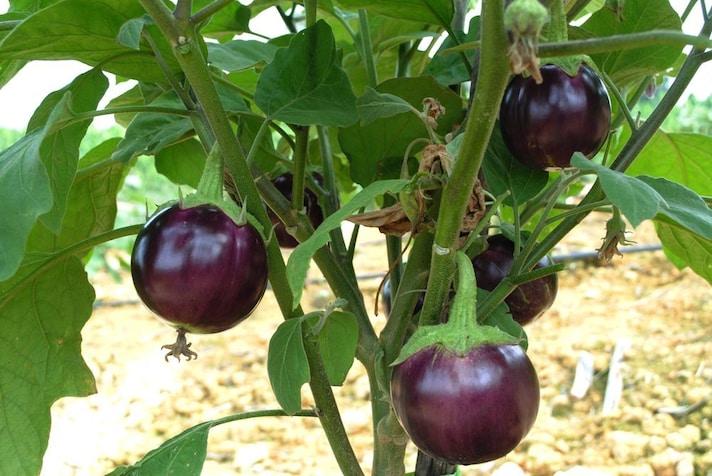
The flavor of round eggplants varies primarily based on the variety and degree of ripeness. Light purple varieties are often characterized by a delicate, mildly pungent flesh; dark varieties may have a slightly stronger flavor, although color alone doesn't predict sweetness or intensity. Young eggplants generally have a uniform flesh, with barely visible seeds and a very mild bitterness; large, mature eggplants, however, may develop harder seeds and a more bitter flavor. During cooking, the spongy texture transforms: the flesh becomes soft and creamy, absorbs seasonings, and mixes easily with cheese, tomatoes, bread, and herbs.
Is It Necessary to Salt Them?
Salting can help tone down any bitterness and help the flesh lose some of its water content, but it's not essential for all round eggplants. Young, fresh eggplants with pale flesh and few seeds can generally be cooked immediately, especially when baked, grilled, or used in stuffed recipes. Salting can, however, be useful for very large, ripe, or seeded eggplants.
It can also be beneficial before frying: a less moist surface promotes more even browning and reduces spattering when the slices are immersed in oil. Small eggplants for stuffing are not normally left whole in salt: depending on the preparation, they can be blanched, briefly steamed, or hollowed out and cooked directly.
How to Use Round Eggplants in The Kitchen
Shape and size largely determine the best way to use round eggplants. Large specimens yield wide, even discs, suitable for frying, cutlets, and layering; medium-sized ones can be diced or halved and hollowed out. Smaller varieties, on the other hand, are often harvested young specifically to be stuffed and served as individual portions.
The flesh easily absorbs oil and seasonings, so it's important to choose the right cut based on the cooking method, dry the eggplant thoroughly before frying, and avoid overcrowding the pan. The peel is edible and can be left on: it prevents the slices from breaking and makes the stuffed eggplant casings more resistant.
How to Cut and Cook Large and Medium Eggplants
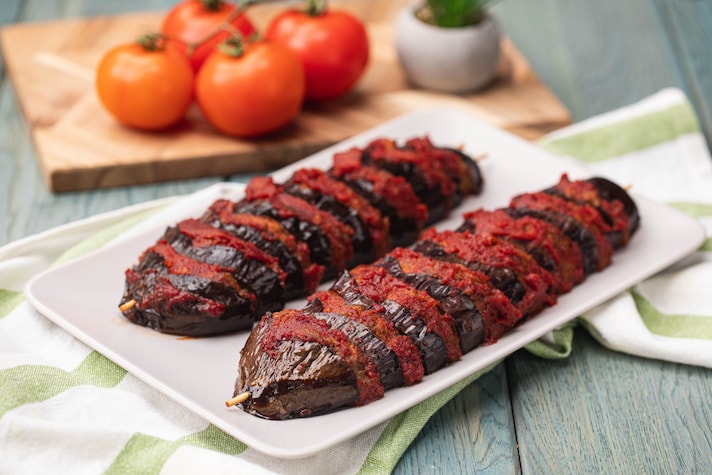
Cut crosswise, large round eggplants yield wide slices, particularly suitable for cutlets, pizzas, medallions, parmigiana, timbales, and turrets. It's best not to slice them too thinly, as they could dry out during cooking, break, or otherwise become unsuitable for any fillings. The discs can be fried, grilled, breaded, or baked: for frying, they must be thoroughly dried and immersed in oil at the right temperature, cooking a few at a time. When grilled, they retain a good structure and can be served as a side dish or used to create layered dishes.
Medium-sized eggplants can be diced for caponata, sauces, side dishes, and pasta, rice, or grain condiments. Smaller pieces tend to become soft and creamy, while larger ones retain a more distinctive texture. They can be pan-fried, preferably without overlapping them too much, or roasted in the oven.
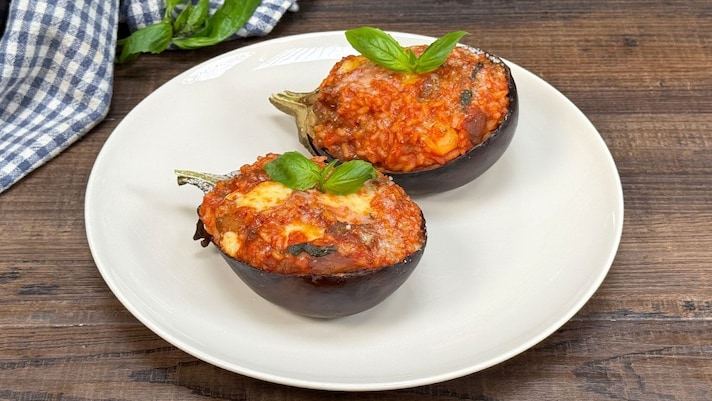
The Small Round Eggplants to Be Filled
Small, round eggplants are generally harvested young, when the flesh is still tender, the seeds are barely developed, and the skin can be scooped out without breaking. Their small size is therefore not a defect, but rather a desirable characteristic for preparing individual stuffed portions.
Among the best-known varieties is the Genoese round eggplant, a traditional Ligurian cultivar that produces small, round, dark purple, shiny fruits: it is mainly used to prepare stuffed eggplant; the very small specimens, harvested towards the end of the season, can also be preserved in oil.
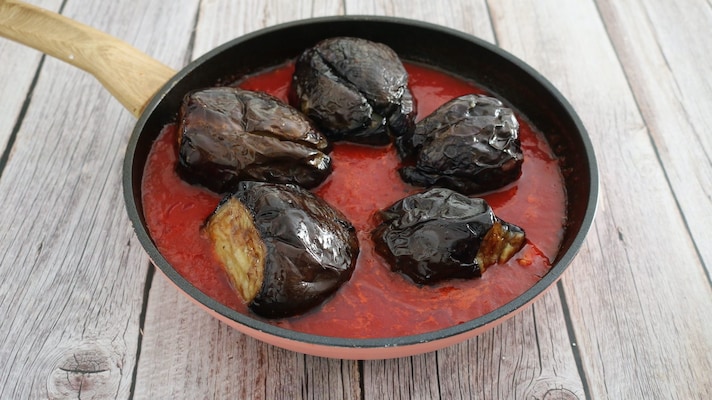
The small eggplants can be halved or the tops removed: depending on the recipe, they can be hollowed out raw or blanched briefly before removing the pulp: pre-cooking makes the insides easier to remove and reduces subsequent baking time. When hollowing out, it's important to leave a thick enough edge to keep the casing intact. The removed pulp is cooked, chopped, and added to the filling, generally made with soaked bread, eggs, cheese, and herbs.
How to Choose Fresh Round Eggplants
To evaluate the freshness of a round eggplant, you need to consider the skin, the calyx, the weight and the consistency.
- The surface must be smooth, taut and shiny: a dull, wrinkled or yielding skin generally indicates that the fruit has begun to lose water.
- The calyx should appear green, fresh, and well-sealed; dry or blackened areas may indicate an older harvest; some varieties have thorns on the calyx, which are not a defect.
- When gently pressed with a finger, the flesh should give slightly and quickly return to its original position: a very soft eggplant may be old or damaged; an excessively hard and underdeveloped fruit may have been picked too early.
- The weight must be proportionate to its size: an unusually light specimen may have lost water and have dry or loose flesh.
To obtain evenly sized discs, it's best to choose large, symmetrical eggplants without deep ribs; for stuffed dishes, however, small or medium-sized ones are preferable, similar in size, to ensure uniform cooking times.
Very large eggplants are not necessarily worse, but they may contain more seeds: if the calyx appears fresh and the skin is taut, the large size can be an advantage for cutlets, stuffed slices and layered recipes.
How to Store Them
Round eggplants are delicate and should be consumed within a few days of purchase. They can be stored in the vegetable drawer of the refrigerator, unwashed and without sealing them in an airtight bag. It's important not to crush them under heavy foods: bruising damages the flesh and accelerates spoilage. Once cut, the surface tends to oxidize and darken. Any excess can be covered and stored in the refrigerator, but should be used as soon as possible.
For longer shelf life, it's best to cook them first: grilled, roasted, or fried slices can be frozen in portions, separating them with parchment paper when necessary. Freezing raw eggplant is generally not recommended, as it alters the structure of the flesh and can make it soft and watery after thawing.
;Resize,width=767;)
