
Mead is one of the most famous Scandinavian beverages: this fermented honey liqueur, famous for being the drink par excellence of the Vikings (but also consumed in other cultures, such as the Celtic and Germanic ones), has been documented since ancient times in Africa, Asia, and Europe; it has been hypothesized that it may have been the first fermented beverage ever, even predating the development of agriculture, and therefore preceding wine and beer.
Intoxicating and fragrant, mead has always been called the “drink of the gods” for its sweet yet alcoholic taste, but also for the beneficial properties that have been attributed to it over the centuries. But in Norse mythology there is another mead, one even more powerful and special, one that literally fell from the sky, stolen by the king of the gods himself and with an incredible ability: to bring the gift of speech, poetry, wisdom and omniscience.
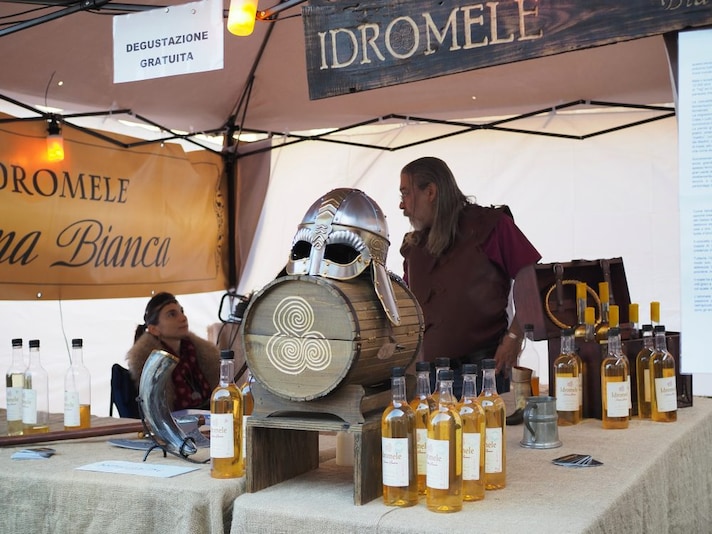
According to tradition, it is called the Mead of Poetry, and it is the protagonist of one of the lesser-known but most fascinating myths in the rich mythology linked to Norse culture. A tale that, like all legends, has a very specific purpose: to celebrate the power and importance of poetry and knowledge. We will tell you the myth in its best-known version, as reported by the Icelandic writer and historian Snorri Sturluson in the second part of the Prose Edda known as Skáldskaparmál, in Old Norse “dialogue on the art of poetry.”
Prepare to discover all the power, beauty and mystery of the legend surrounding the mead of poetry, and immerse yourself in a tale of cunning, courage and perseverance, but also of celebration of poetic inspiration and the power of knowledge.
What is The Mead of Poetry?
The Mead of Poetry, originally skáldskapar mjǫðr or “mead of poetry,” is a mythical drink from Norse mythology similar to the famous mead but much more potent: Scandinavian mythological literature describes it as a liquor that makes anyone who drinks it a “poet or sage,” giving them the ability to compose verses and answer any question. It is a drink that belongs to Odin himself, who can share it with those he deems worthy of becoming sage, namely skalds (from the word “skalds”), the singers of the Viking era who are thus able to draw poetic inspiration thanks to this supernatural drink.
But why link a traditional liqueur to poetic inspiration? First of all, we must consider the context in which the history of the Mead of Poetry was born: Scandinavia, a land of extremes made of bright, short summers and long, dark winters. In this harsh environment, even more so in the Viking era, culture and oral tradition played a crucial role in keeping alive the stories and wisdom of previous generations, giving them a sense of belonging and continuity. To this must be added the great importance that Nordic culture placed on poetry: for the Norse, poetry was not only art but also a vehicle for preserving the history, identity, and philosophy of a people. The “skalds,” the poets of the time, were deeply respected and honored and often sought out by tribal chiefs and kings to document deeds and events or to sing the praises of the gods.
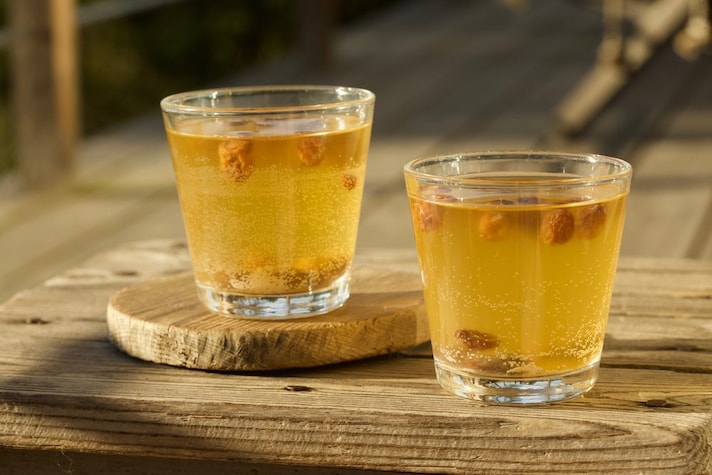
They were considered so wise that they believed the inspiration behind their compositions, often very complex and rich in metaphor, to be of divine origin, a nature explained precisely by the investiture through the mead of poetry. Why mead? Probably because it was a very widespread and beloved drink, already associated with the gods for its delicacy. Thus, with the legend of the Mead of Poetry, mead is invested with sacredness, becoming a powerful metaphor for poetic inspiration, for the ability of words to start feuds but also to bring healing and profound inspiration, but also for the constant search for knowledge, almost more important than knowledge itself.
Mead of Poetry's Creation and The Search of Odin
In Norse mythology, gods and heroes were not only figures to be venerated but also the embodiment of virtues, aspirations, and contradictions of Scandinavian society. In this context, Odin was seen not only as the supreme god, king of all the gods, but also as the symbol of knowledge and wisdom, sometimes at great personal cost. It is no coincidence, therefore, that the story of the mead in poetry is closely linked to Odin and his desire to always know more.
It all began with the death of Kvasir, the wisest of the Æsir, the lineage of gods in Norse mythology, associated with the sky, power, and war, to which Odin also belongs. His wisdom, due to his birth that united the essence of the Æsir and the other lineage of gods known as the Vanir, linked to the earth and fertility, could not be wasted, so a decision was made: Kvasir's blood was collected and mixed with honey, giving life to the Mead of Poetry, a drink capable of granting the gift of poetry, but also a source of infinite wisdom and knowledge.
Odin, ever hungry for wisdom and knowledge, learned of the existence of this precious, special mead and, recognizing its potential, decided to embark on a quest to obtain it not only for himself, but also to bring this gift to the gods and the most worthy men. Odin faced great challenges: the Mead of Poetry was guarded by the giant Suttungr inside a mountain (not surprisingly, the drink is also known as "Suttungr's mead"). The god exploited his great cunning and, after overcoming many tests of intelligence and ingenuity, assumed a false identity to seduce the giant's daughter, Gunnlöð. Satisfied, she seated him on the golden throne and allowed him to drink three sips of the precious beverage.
Odin then used the three sips to drain all the Mead of Poetry, then transformed into an eagle and flew away as fast as he could. The giant Suttungr, discovering the deception, transformed into a bird and chased Odin, who, however, in his haste, lost some of the liquid retained in his mouth, letting it fall to the earth. He nevertheless managed to outrun the giant, return home to Asgard, and spit the stolen liquid into the vats where it would be stored.
The Mead of Poetry then became the property of Odin himself: the father of the gods, from then on, bestowed the special mead of his choice, thus ensuring that the gift of poetry and wisdom was accessible to the gods and, later, to worthy men. He himself was transformed by the drink, which allowed him to compose poems and spells, serving as a bridge between gods and men, and cementing his reputation as an inexhaustible source of wisdom and knowledge. And what about the mead of poetry that fell from his beak during the flight? Legend has it that it remained on earth, available to anyone who found it: in mythology, it is called skáldfifl, the "poet's portion."
The Legend's Meanings
This myth, like many other stories in Norse mythology, highlights the value of perseverance, ingenuity, and the constant pursuit of knowledge— qualities that Odin embodied like no other. In this light, the Mead of Poetry is much more than a simple magical drink, but a true symbol of the thirst for knowledge that fuels the human soul throughout the ages.
Indeed, in Norse culture, wisdom was not just a prized skill but an essential virtue to aspire to: Odin, who undertakes sacrifices, adventures, and subterfuges to obtain the drink—and thus absolute wisdom—teaches that true greatness lies not in conquest, but in the eternal pursuit of knowledge and understanding. And who, for the Norse, was wiser than poets? Thus, Odin's special mead also becomes a symbol of poetry and poetic inspiration, a sort of catalyst for poetic creation, as it bestows greater wisdom and inspiration.
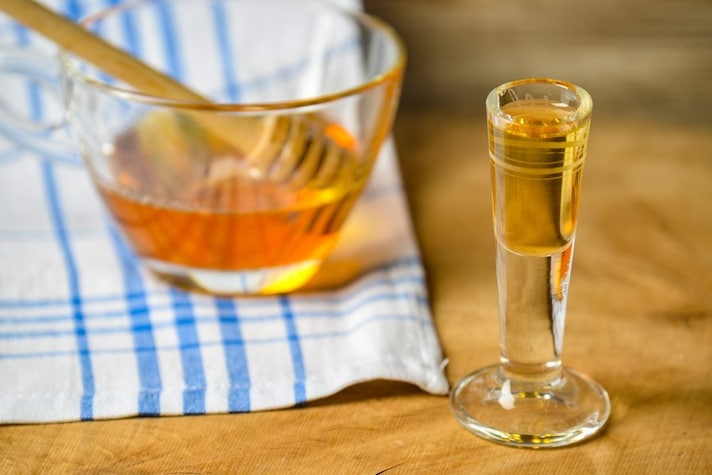
Furthermore, the Mead of Poetry was considered a gift from the gods to their chosen ones, a way to draw closer to divinity and connect with the divine and the sacred on a deeper level. The Mead of Poetry is therefore not a common mead, but a powerful spiritual and cultural symbol. Are you wondering if it exists or has ever existed? No, the Mead of Poetry has never existed in the literal sense; it lived only in stories and survived only metaphorically in modern literature and art. But perhaps that's simply because no one has yet found that little bit of the drink lost by Odin, still hidden somewhere on earth.
;Resize,width=767;)
